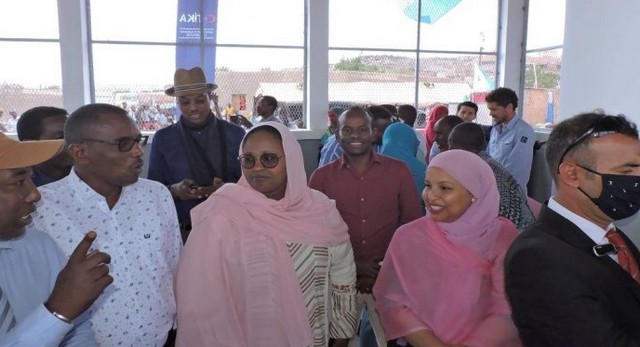
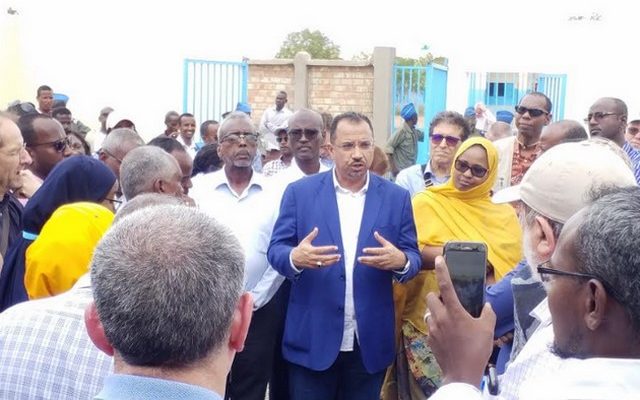
In Balbala, in the Layabley and Moustiquaire neighborhoods, the Integrated Urban Development Project (PDUI 2) and its extensions, PDUI 2 bis and PDUI 2 ter, do more than just build roads, public and security infrastructure, or recreational spaces. They also transform lives. Thanks to funding from the French Development Agency (AFD), ADDS is turning construction sites into veritable schools of life, where hundreds of young men and women learn trades and build, stone by stone, their neighborhoods and their own futures.
A wind of hope has been blowing recently in the Layabley and Moustiquaire neighborhoods. The Integrated Urban Development Project 2, along with its complementary extensions, PDUI 2 bis and PDUI 2 ter, financed by the French Development Agency and implemented by the Djiboutian Agency for Social Development (ADDS) in this sector of the Balbala municipality, are not only intended to pour concrete and asphalt, they also have a social character and constitute a boon for the young people of these neighborhoods who are the direct beneficiaries of these urban transformation initiatives within the framework of the government’s “Zero Slum” program.
“The objective is twofold, according to ADDS executives in charge of these projects. On the one hand, it aims to offer a first professional experience to young people trained in the building trades, and on the other hand, to directly inject the project’s benefits into the local economy by employing the residents themselves.”
The beating heart of this approach lies in a market mechanism with a social clause, imposed on construction companies to guarantee active participation of young people and women from the neighborhoods concerned.
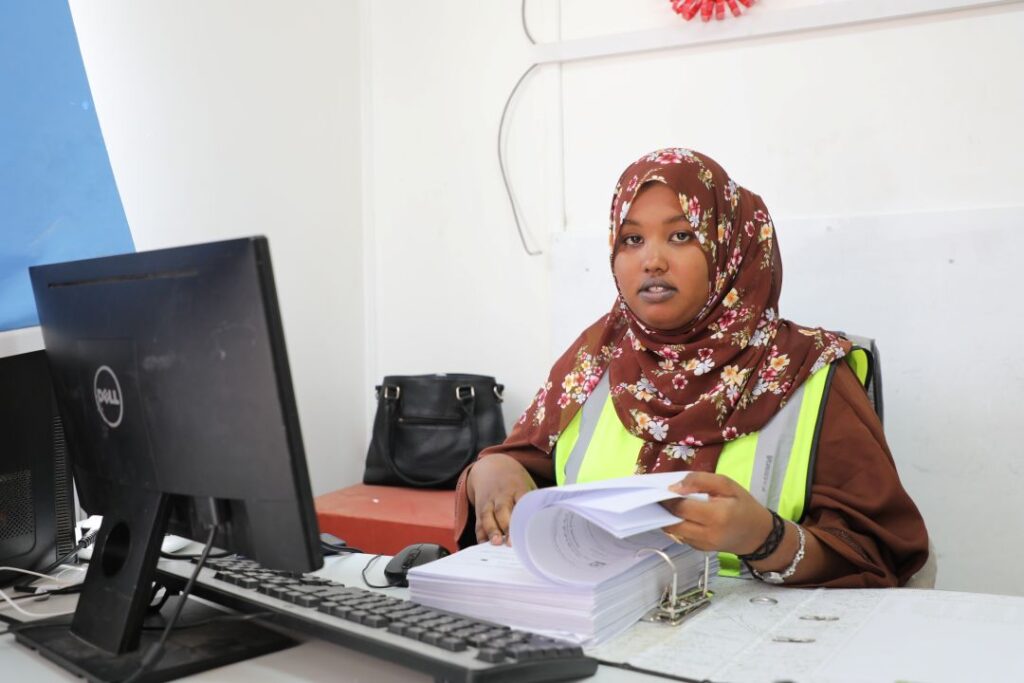
Behind this innovation lies a strong conviction driving the ADDS teams: urban development is only worthwhile if it benefits those who experience it daily. Therefore, every company working on the PDUI 2 construction sites is required to employ a quota of young people trained in the project’s technical programs or to recruit local day laborers from the targeted neighborhoods.
“The objective is twofold, according to ADDS executives in charge of these projects. On the one hand, it aims to offer a first professional experience to young people trained in the building trades, and on the other hand, to directly inject the project’s benefits into the local economy by employing the residents themselves.”
This is how the social integration component of PDUI 2 became a true model of social and economic integration.
More than 39,000 local workdays created…
The figures speak for themselves. According to ADDS data, between 2021 and 2023, the Layabley and Moustiquaire construction projects generated over 31,000 workdays for locally recruited residents, representing 116% of the initial target set for this phase of the program. During the same period, nearly 8,000 workdays were completed by trainees from vocational training programs. Under PDUI 2 ter, the ambition is even greater: 28,000 person-days are planned for local labor and 14,000 person-days for trainees, confirming the commitment to further strengthening the project’s social impact.
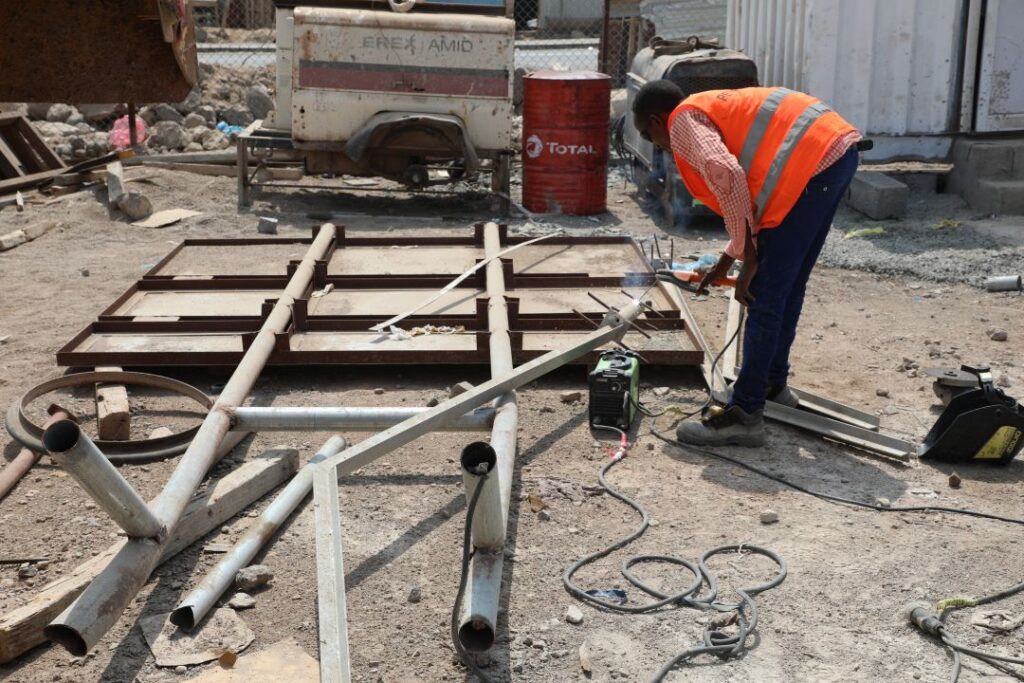
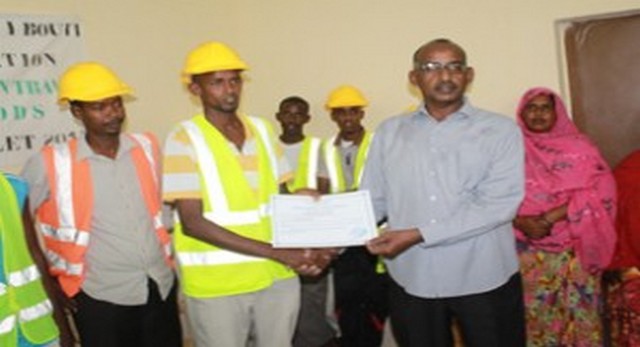
It is worth recalling that to alleviate the high unemployment rate affecting young people in this sector of the Balbala commune, the Djiboutian Agency for Social Development (ADDS), the institution responsible for implementing the PDUI 2 program, in collaboration with the Ministry of National Education and Vocational Training (MENFOP), the Social Action and Family Development Agency (CASAF), and the Chamber of Commerce, provided upstream training to some 192 young people, including 94 girls, who had dropped out of school and came from the Layabley and Moustiquaire neighborhoods. These young people were trained in trades such as English, computer and network technician, solar equipment maintenance, sewing/embroidery, hairdressing and beauty, cooking and catering, building electricity, heating/cooling, welding, plumbing and sanitary installation, automotive maintenance, handling equipment operation, general masonry, tiling, painting, and aluminum joinery. Thirty-five of them, trained according to a quota of skills needed by the company, were recruited as interns. On the ground, the impact is evident in the young people’s eyes. Ahmed, 26, was one of them; he wields a trowel with confidence. “This is the first time I’ve worked on a project of this scale. I earn my living honestly, and I learn something new every day. After the construction site, I’d like to set up my own team of masons,” he says.
Nearby, Mahado Youssouf Djibril, who chose welding as a career path, skillfully alternates between the angle grinder and the arc welder. She works as a welder for the company Hawk.
At just twenty years old, Mahado works in this physically demanding field, which until now has been reserved for men only. “At first, I had difficulty entering this ‘masculine’ world, but now I feel completely at home here. I have gained confidence, competence, and respect from my colleagues, who now recognize the quality of my work and my determination,” she tells us with a smile.
Micro-projects that offer hope
The Integrated Urban Development Project (PDUI 2) and its extension, PDUI 2 bis, have also given new impetus to the local associative fabric.
Funded by the French Development Agency (AFD) through the Community Development Fund (FDC), the initiative enabled the associative fabrics of this sector to carry out some 36 micro-development projects, each more important than the last, for the inhabitants of these two districts of the Balbala commune.
Reaching nearly 4,000 direct beneficiaries within the communities of Balbala with a total investment of 37,970,000 FDJ. The community projects financed by the AFD have made tangible progress in the Layabley and Moustiquaire neighborhoods, namely the increase in the rate of access to drinking water thanks to household connections to the ONEAD networks, the improvement of hygiene and public health through the rehabilitation of latrines and the strengthening of sanitation awareness campaigns, the empowerment of young people by offering them new opportunities and developing technical skills such as training in stone cutting and laying.
As part of strengthening the capacities of the youth association fabric in these neighborhoods, a training program in driving light cars to heavy goods vehicles, including transport vehicles, put in place as part of this project, has enabled 72 young people to obtain driving licenses in categories B, C and D.
During the driver’s license presentation ceremony, the mayor of Balbala, Mohamed Hassan Saïd, emphasized the importance of this program for young people in the underprivileged neighborhoods of this sector of the capital. “This noble initiative contributes to youth employability and, above all, to the fight against idleness and juvenile delinquency,” he stated.
This statement was confirmed by the testimony of Lukman Mouhyadin, a member of the “Layabley” association. He is part of a group of young people who benefited from a similar program. According to his testimony, the driver’s license (category B) obtained through the PDUI2 and PDUI2 bis programs, along with 14 other friends from his neighborhood, was a godsend for him and his family.