On the cusp of its 18th anniversary, the Djiboutian for Social Development Agency (DSDA), an institution under the supervision of the Ministry of Social Affairs and Solidarity, has established itself as a key player in the government’s poverty reduction program. From access to essential services and community resilience to women’s empowerment and youth integration into the job market, ADDS has continuously expanded its scope of intervention. In this interview, its Director General, Mahdi Mohamed Djama, reviews nearly two decades of work, reflects on the challenges overcome, and unveils the strategic outlook for his institution, which is more committed than ever to serving social development in Djibouti. We thank you in advance, Mr. Director General, for this interview, which will provide us with a comprehensive overview of ADDS and its achievements.
The Nation: Mr. Director General, next December, DSDA will be 18 years old. How is it doing today? And if you had to draw up an overall assessment of these 18 years of existence, what conclusion would you draw?
Mahdi Mohamed Djama: Yes, 18 years already. A good age for a human being, but also a respectable age for an institution! The Agency is doing well, and its overall performance is positive. It fulfills the missions assigned to it by its founding documents and covers the entire national territory. I should point out that these missions have expanded over time.
The Nation: Your agency is a central player in the national policy to combat poverty, particularly in the implementation of the Djibouti 2035 Vision. How does this vision guide your actions and strategic priorities?
MMD: Djibouti’s Vision 2035 focuses on regional integration and spatial inclusion, prioritizing the socio-economic development of urban, rural, and peripheral areas through investments in infrastructure and access to essential services. This vision addresses various vulnerabilities and multidimensional poverty, with rural areas experiencing the most pronounced deprivation. The actions of the DSDA (Djiboutian for Social Development Agency), through the projects it implements, are based on a logic of improving living conditions for residents while developing economic opportunities: improved access to water, energy, education, and healthcare; promotion of income-generating activities; training for young people for immediate employability; environmental protection; and more. Its strategies thus aim to build a sustainable and inclusive socio-economic landscape, resilient to shocks and conducive to long-term growth throughout the country.
Aligned with the Sustainable Development Goals, the programs and projects that ADDS has implemented since its creation in 2007 are carried out in collaboration with a wide range of technical and financial partners, both national and international, who have entrusted the Agency with nearly US$300 million in funding. In your opinion, what earns DSDA such trust?
Indeed, ADDS’s activities are aligned with at least 13 Sustainable Development Goals. Furthermore, it is important to clarify that all external funding is formalized through agreements between the Government and the majority of donors. Subsequently, the Government delegates the management of these funds to DSDA (Djiboutian for Social Development Agency) through a delegated project management agreement, ensuring the successful implementation of projects. Everything is therefore governed by well-defined procedures, and DSDA (Djiboutian for Social Development Agency) has consistently honored its commitments and fulfilled its responsibilities. Its management is transparent; its accounts are audited by independent firms and approved at three levels (the Board of Directors, the Council of Ministers, and the National Assembly). Its performance, efficiency, and effectiveness indicators are verifiable and measurable. These factors foster trust.
In the context of implementing various development projects, ADDS often refers to “an integrated and participatory approach.” Can you explain to us what this method of intervention on the ground actually entails?
First, a “participatory and territorial” approach is used, based on promoting grassroots development and empowering local initiatives. The future beneficiaries in the project’s coverage areas define and prioritize their needs. Next, the Agency consults with sector representatives and concession holders to determine if they have planned activities in these areas and if the necessary funding is available. Following this process, the DSDA (Djiboutian for Social Development Agency) finalizes the activity to be implemented, assigning it to a specific component and allocating the corresponding budget.
“Integrated.” ADDS interventions constitute a package:
– There is the catching up of infrastructure for access to basic services (access to water, electricity through extensions of electrical or solar networks or the installation of wells and underground cisterns),
– Actions in the education and health sectors (construction and/or rehabilitation of schools and colleges) while equipping them with essential school and medical equipment (school benches, radiology unit, dental chairs, maternity beds, etc.),
– Capacity building actions for stakeholders such as training for immediate employability of out-of-school boys and girls, training of regional council members, training of associations.
– All these actions are accompanied by the promotion of income-generating activities through specialized tools such as savings and credit unions, and the Islamic microfinance unit.
With this approach, all themes are addressed in a complementary and cross-cutting manner.
For the past 18 years, ADDS has led hundreds of nationwide projects. What were the major challenges encountered in implementing these projects? Similarly, has DSDA faced challenges related to project sustainability, particularly the maintenance of the infrastructure put in place?
The problems encountered were primarily technical, related to the distance between the project sites and the weaknesses of certain companies. However, there were also issues with specific sectors due to differing interpretations of the roles of delegated project owner and DSDA (Djiboutian for Social Development Agency) implementation agency. But we managed to overcome these challenges.
For the maintenance and sustainability of the infrastructure, DSDA (Djiboutian for Social Development Agency) is obligated to officially transfer ownership of the constructed works to the final beneficiary (regional council, sectoral ministry, or other administration). From the date of this transfer, maintenance and sustainability become the sole responsibility of the final beneficiary.
At the beginning of 2024, you participated in the 62nd Session of the United Nations Commission on Social Development in New York, where you advocated for strengthened solidarity and sustainable social inclusion. What concrete effects has this advocacy had for DSDA?
Indeed, in February 2024, the DSDA (Djiboutian for Social Development Agency), in conjunction with the Ministry of Social Affairs and Solidarity, represented the Republic of Djibouti at this session, whose theme was “Promoting social development and social justice through social policies to accelerate progress in the implementation of the 2030 Agenda for Sustainable Development and achieve the overarching goal of eradicating poverty.” This participation was part of a strategic approach aimed at demonstrating Djibouti’s commitment to social development on the international stage and aligning its national policies with global objectives. It was an exceptional opportunity for our country to make its voice heard internationally and contribute to global debates on crucial social development issues. On the sidelines of the session, it also allowed for the establishment of strategic contacts with other delegations and international organizations to strengthen technical and financial cooperation.
The concept of “Affinity-Based Mutual Aid Groups” (GEA) is one of DSDA’s flagship initiatives. Following its success in the localities of Ali Adde and Obock, you undertook to extend it to other regions of the country. What is the current status of this program in Tadjourah and Dikhil, where it was launched last year?
Is it starting to take root?
The promotion and development of “Affinity-Based Support Groups” (ABGs) in rural areas is one of the Agency’s flagship achievements and has been implemented in all regions. Highly vulnerable women have been encouraged and supported to form groups of 10 to 15 by voluntary decision based on their desire to overcome their vulnerability.
With a contribution of 100 francs per week per woman, some groups were able to build up substantial savings. This allowed members to take out small loans within the group to develop income-generating activities, thus improving their living conditions. Previously living on food aid from the World Food Programme, they are now self-sufficient, a change in status that has improved their social standing. Through this mechanism, children are sent to school, housing is improved, and hundreds of women are lifted out of anonymity and poverty—a source of considerable pride for DSDA (Djiboutian for Social Development Agency).
The Community-Driven Development (CDD) model, which is also one of DSDA’s flagship programs, seems to be yielding good results in rural areas. Do you plan to expand it further, or even adapt it to urban environments?
Community-Driven Development (CDD), a new concept launched by the World Bank, has been implemented for several years in rural areas of the five regions and is yielding satisfactory results. The grassroots community identifies and prioritizes its most urgent infrastructure needs (classroom expansion, creation of community wells, expansion of health centers by adding equipped maternity wards, etc.), capacity building, and other needs. The DSDA (Djiboutian for Social Development Agency) provides only technical support in the procurement process, monitoring of activity implementation, and evaluation of results. CDD activities focus on community assets within a small-scale social environment where consensus on priorities is easily reached. In urban areas, at a different scale, interventions are more aggregated (road construction, expansion of water or electricity networks, solid waste management systems, etc.).
Are there any short- and medium-term development projects planned in your program agenda? Can you tell us about the objectives and major progress of these projects?
Three large-scale projects have just started, and their execution will extend until 2029:
– The Integrated Urban Development Project 2 Ter, currently being implemented in Balbala,
– The Integrated Community Resilience Project, covering the Dikhil Region and the three localities hosting refugees (Ali Adde, HollHoll and Obock),
– The Chebelley Solid Waste Technical Landfill Project.
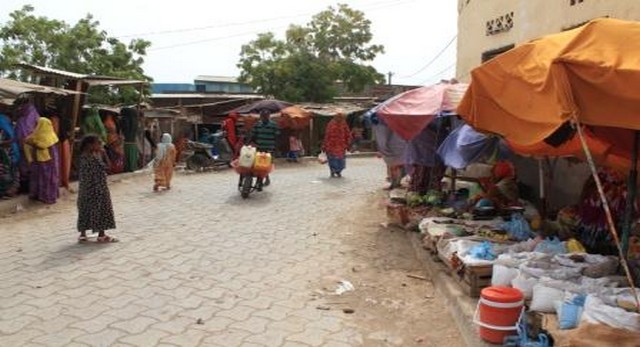
The PDUI2 Ter Project, part of the “Zero Slums” Program, is the third phase of a larger integrated urban development program, the PDUI (Integrated Urban Development Program), funded by the French Development Agency and implemented in the Layabley-Moustiquaire neighborhood. This project, part of a comprehensive urban planning scheme and integrated development strategy, represents €11 million of the program’s total budget of €24 million. The program aims to reduce poverty and sustainably improve living conditions in terms of safety, sanitation, and the functionality of public spaces. It includes the restructuring of the neighborhood by providing essential infrastructure, commercial facilities, and recreational amenities. Beyond infrastructure, the project incorporates a social dimension focused on strengthening community organizations and supporting out-of-school youth, as well as improving the economic capacity of residents.
Balbala was chosen because the area has urbanized very rapidly and spontaneously over the last ten years. In particular, the Layabley-Moustiquaire neighborhood is among the most impoverished and isolated in the Commune.
Some households had to be relocated due to development work, but some were rehoused at the IOG Foundation, while others received financial compensation. These relocations were carried out in accordance with the most stringent national legislation and World Bank standards regarding involuntary population displacement. The resettlement operation was conducted to ensure fairness and dignity for the families involved.
The project, built to international standards, for a state-of-the-art landfill for household and similar waste, jointly funded by the French Development Agency and the European Union with €16 million on behalf of the Djibouti Roads Authority (OVD), aims to improve the living conditions, health, and environment of the population of Djibouti City, and to reduce greenhouse gas emissions from the waste sector. We are also working with the OVD and UNICEF on the construction of a waste recycling plant.
The Integrated Community Resilience Project, with a total cost of US$31 million, is funded by the World Bank. DSDA (Djiboutian for Social Development Agency) is implementing a portion of the project, contributing US$15 million. The project aims to improve access to basic services and safety nets, as well as strengthen economic opportunities for vulnerable host communities and refugees in the target areas. This project will operate in Dikhil.
Continuing with PDUI 2, over 300 young people participated in training programs, and a gender perspective was integrated into the training. What were the concrete results of these training programs in terms of professional integration?
First, the training program, which focuses on topics directly related to the most pressing demands of the job market, is aimed at a diverse age group of young people, regardless of gender. Only the desire to be trained, the choice of field of study, and success on fairly basic knowledge tests determine the ratio between boys and girls. Some girls choose traditionally male-dominated professions such as electrical work, construction, automotive maintenance, plumbing, solar equipment maintenance, and so on.
For integration purposes, some are recruited on fixed-term contracts as laborers by the company carrying out the work, according to its needs. This is intentionally one of the social clauses in the construction contract. Meanwhile, others become self-employed or join service companies.
What are the key indicators you are monitoring to measure the overall impact of the project on the quality of life of residents, the lifespan of infrastructure and local initiatives?
First, I would like to point out that DSDA (Djiboutian for Social Development Agency) has a specialized Monitoring/Evaluation and Impact Assessment Department. In terms of impact measurement, we use two categories of indicators:
– Objective indicators such as access rates to water, domestic electricity, and public lighting from public networks or local initiatives (i.e., community sub-projects), the number of infrastructures completed compared to initial projections, etc. These rates are measured in comparison with pre-project baseline conditions. These are just examples.
– Subjective indicators through a beneficiary satisfaction survey conducted post-project on a representative sample of these beneficiaries.
This measurement mechanism is used for all projects.
Is there an independent assessment of the social and urban impact of the PDUI? What do the initial findings say?
Yes, there is what is called a “Project Completion Report” which outlines all the technical and social aspects of the project, and the results achieved in relation to the planned indicators. This final evaluation is carried out separately by an individual consultant on behalf of DSDA (Djiboutian for Social Development Agency) and by AFD (French Development Agency)as the donor. The overall positive results led AFD to continue its funding of successive phases (PDUI 1, PDUI 2, PDUI 2 Bis, PDUI 2 Ter).
In your opinion, is this PDUI Programme “model” transferable to other districts or to other Regions?
Certainly, the program itself is adaptable to needs and therefore transferable. But the most important aspect is the integrated design and implementation approach; that is, how to link operational responses to expectations and with a view to achieving a real long-term impact. The identification and establishment of synergies with the interventions of other stakeholders must also be considered.
Finally, if you had to define in one word what PDUI 2 represents for Djibouti today, which one would you choose and why?
Without hesitation, I would say “success”. This program, within its means, is an operational response to a range of problems:
– The program opens up the neighborhood through key infrastructure (roads, pedestrian walkways, access stairs, etc.)
– Access to basic services (drinking water, electricity) is improved directly or indirectly,
– Commercial facilities are built for income-generating activities,
– The actors are trained to unleash initiatives (out-of-school youth, civil society),
– Improving solid waste management is addressed (waste collection point, acquisition of collection trucks and skips),
– A “Community Development Fund” is being established to support sub-projects with a community focus
It’s a complete program!
Before concluding, Mr. Director General, access to renewable energy, particularly solar, is among your priorities. What concrete progress has been made in this area?
Yes, developing access to renewable energy is a key aspect of our work. For example, a solar power plant has been under construction in Ali Adde for about ten years. Initially designed for 63 kW peak power, its capacity has now increased fivefold to 350 kW peak, and the distribution network has been expanded in parallel. This means that the number of people benefiting from renewable energy has increased. More than 200 households, after having their internal electrical installations brought up to code, now have access, and public institutions (administrative offices, a middle school and elementary school, and a health center) are connected to the grid. Businesses have proliferated, and the educational conditions for students have improved.
Furthermore, the use of solar energy is planned for the operation of the large Chebelley technical landfill center, the construction of which is in the preparation phase.
This is to tell you that the development of solar energy and its uses play a major role in our actions.
How did ADDS manage inter-institutional coordination between ministries, donors, local authorities and associations? What were the points of friction and the levers for success?
The DSDA (Djiboutian for Social Development Agency) is overseen by a Board of Directors whose members are appointed by presidential decree and order. This body makes strategic decisions regarding the agency’s direction and areas of intervention. The Presidency, the Prime Minister’s Office, as well as sectoral bodies and regional councils—stakeholders in the fight against poverty—are represented on this board. Furthermore, each project has a Steering Committee whose responsibilities and members are also defined by official documents (presidential order). This committee serves as a platform for overseeing project implementation and as a structure for coordination and problem-solving in case of obstacles.
Any points of friction? No, there aren’t any. On the contrary, this institutional structure allows ADDS to fulfill its increasingly broad missions because it covers the entire territory. It’s the only agency with this reach, in fact.
In conclusion, what message would you like to convey?
I firmly believe that DSDA (Djiboutian for Social Development Agency) has its place within the institutional framework for combating poverty. Therefore, particular attention must be paid to its long-term sustainability, both in terms of its budget, which remains its major challenge, and in terms of the recognition of its status as a delegated project owner—a status that is unfortunately interpreted in various ways.
DSDA (Djiboutian for Social Development Agency) executes on behalf of the State and decentralized communities, it will never be in competition with sectoral entities.