Djiboutian Agency for Social Development

Top Menu

  • Français
  • English

Main Menu

  • Home
  • The Agency
    • From the General Manager
    • Presentation of the ADDS
    • Agency Organization
    • Institutional structure
    • Funding
    • Area of ​​intervention
    • Texts and laws
    • National partners
    • International partners
  • The Ministry
    • Presentation of the INDS
    • Context
    • Secretariat of state
  • News
  • Publications
    • Magazines @en
  • Contact Us
  • Français
  • English

logo

Djiboutian Agency for Social Development

  • Home
  • The Agency
    • From the General Manager
    • Presentation of the ADDS
    • Agency Organization
    • Institutional structure
    • Funding
    • Area of ​​intervention
    • Texts and laws
    • National partners
    • International partners
  • The Ministry
    • Presentation of the INDS
    • Context
    • Secretariat of state
  • News
  • Publications
    • Magazines @en
  • Contact Us
News
Home›News›IGAD Lauds Community Projects Benefiting Refugee Hosts

IGAD Lauds Community Projects Benefiting Refugee Hosts

By Connex Design
1 November 2021
2342
0
Share:

The implementation of the Kenya Development Response to Displacement Impacts Project (KDRDIP) by local communities has attracted the attention of countries in the Horn of Africa to benchmark on the successes and challenges of the project as the World Bank extends the project to their countries.
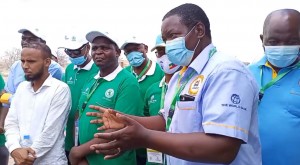
KDRDIP’s Team leader Wilfred Omari

KDRDIP’s Team leader Wilfred Omari

KDRDIP’s Team leader Wilfred Omari briefing the IGAD delegation on how they train communities to implement their own projects at Armed Tukale, Garissa County. Photo by Erick Kyalo

KDRDIP is a World Bank funded project at a cost of Sh10 billion for a period of five years to help the communities in Garissa, Wajir and Turkana to mitigate the effects of hosting refugees on their lives and livelihoods.

Country members of the Intergovernmental Authority on Development (IGAD) Ethiopia, Uganda, Djibouti, Sudan and Somalia joined the Kenyan officials to tour the development projects in Lagdera and Dadaab sub counties in Garissa.

Among the development projects visited is a science laboratory at Modogashe Secondary School, construction of a medical lab at Dertu Health Centre, borehole water project at Armed Tukale, and two medical laboratories at Modogashe Dispensary.

The IGAD delegation said they were impressed at how the project in Kenya has helped to improve the lives and the livelihood of the refugee host communities especially during a time when the citizens are struggling with the effects of the current drought.

“What we have seen is very good. How the communities have been trained to implement and manage the projects is what I will take home and tell our communities to do the same,” said Djibouti’s Director of Social Development Agency Mahdi Mohamed.

Speaking at Armed Tukale after leading the IGAD delegates to inspect the Sh13.6 million Armed Tukale Water Project, KDRDIP’s team leader Wilfred Omari said that the project follows a community development approach where local communities take charge of projects from prioritisation, planning and implementation.

“We advise them to use locally available resources and contractors. They use simple advertising methods such as placing adverts on trees, public spaces and announcements in mosques and schools,” Omari said.

Omari however regretted the drought situation in the region that has disrupted normal activities and patterns of settlement as people move in search of pasture leaving some projects unutilised or exposed to vandalism.

He urged the national and county governments to collaborate and find ways of mitigating drought effects in the region, reduce movements of people and help them establish permanent settlements.

Director for Relief, Reconstruction and Development Organisation (RRDO) Meshark Sikuku, which is the facilitating partner for the project, said that through training, the communities have been able to democratically elect their committee members, procure, tender and supervise the local projects.

“Our role as facilitating partners is to undertake community mobilisation, sensitisation and capacity building to ensure that communities are equipped with skills to implement the projects,” Sikuku said

“We lead the communities to elect committee members and train them on procurement, finance and project implementation procedures. It is satisfying to see that these communities can actually get funds and develop their villages,” he added

At Maalimin Primary School in Lagdera, the community prioritised construction of teachers’ houses, administration block, water dam and installing of solar power grid in the school to provide the resources the school needs to run smoothly.

Bashir Dahir, a member of the school Board and the community development committee said that the school has not had access to electricity and water since it was started in 2006.

“The first priority for us was constructing teachers’ quarters. This is because most teachers are non-locals and we want to make sure that they are comfortable so that we can retain them.”

“Before this project, some of the teaching staff were not comfortable living here longer because this is an arid region where we do not have water, staff residence and electricity posing a challenge to them,” he added.

Dahir expressed optimism that the communities are now ready to take development in their own hands, choose their priorities right and implement the projects they need.
Previous Article

Delivery of driving licenses to 25 young ...

Next Article

Integrated Urban Development Program PDUI2 ter: Leaders ...

0
Shares
  • 0
  • +
  • 0

Related articles More from author

  • News

    “The solidarity we intend to promote is first and foremost a solidarity of local communities,” President Ismail Omar Guelleh

    29 January 2026
    By Connex Design
  • News

    Female mutual aid: the Indian example transposed into djiboutien context

    27 March 2013
    By ADDS
  • News

    Strengthen the capacity of local actors

    1 September 2013
    By Connex Design
  • News

    Arhiba: ADDS and Atuyofan set against malnutrition

    16 July 2014
    By Connex Design
  • News

    National Solidarity Week 2026 – Ali Sabieh’s Stage: When local development strengthens economic autonomy

    9 February 2026
    By Connex Design
  • News

    Balbala: Official launch of Propeja

    16 May 2016
    By Connex Design
0

Les abonnés lisent aussi...

    Follow us

    Retrouvez-nous sur Facebook

    • Recent

    • Popular

    • Comments

    • Special edition on the ADDS PDUI2 project: A sustainable investment for the population

      By Connex Design
      12 March 2026
    • Grand opening of the PDUI2 social infrastructure

      By Connex Design
      12 March 2026
    • The Djiboutian Agency for Social Development (ADDS): A central player in the dynamics of social ...

      By Connex Design
      12 March 2026
    • Djibouti: 50 years of sustainable partnership with the French Development Agency

      By Connex Design
      12 March 2026
    • Exclusive interview: “DSDA executes on behalf of the State and decentralized authorities; it will never ...

      By Connex Design
      12 March 2026
    • IGAD Lauds Community Projects Benefiting Refugee Hosts

      By Connex Design
      1 November 2021
    • Recruiting a Senior NGOs

      By Connex Design
      2 November 2013
    • “Social safety nets Project” Ms. Kayad and mothers-lights of Dikhil

      By Connex Design
      24 February 2014
    • MAGAZINE «AGIR» NUMBER 2/ EDITORIAL

      By Connex Design
      25 September 2009
    • International tender: Water supply works

      By Connex Design
      15 May 2014

    RECENT PHOTO GALLERIES

    توقيع اتفاقية تعاون بين Adds و Instad لإجراء دراسة حول التنمية الحضرية

    L’ADDS confie à l’INSTAD une étude d’impact du programme PDUI2-version arabe

    ADDS/INSTAD/PDUI2 Version Arabe

    SoundCloud

    MAGAZINES

    • News

      Special edition on the ADDS PDUI2 project: A sustainable investment for the population

      A city is not defined solely by its buildings, roads, or amenities. A city is measured first and foremost by the quality of life it offers its inhabitants. Behind every ...
    • News

      Grand opening of the PDUI2 social infrastructure

      On Thursday, January 22, 2026, His Excellency Mr. Ismaïl Omar Guelleh, President of the Republic, inaugurated the new social infrastructure built in Balbala as part of the Integrated Urban Development ...
    • News

      The Djiboutian Agency for Social Development (ADDS): A central player in the dynamics of social ...

      Born from the merger of ADETIP (Djiboutian Agency for the Execution of Public Works) and the Social Development Fund (FSD) at the end of 2007, the Djiboutian Agency for Social ...
    • News

      Djibouti: 50 years of sustainable partnership with the French Development Agency

      Present in Djibouti since 1974, the French Development Agency (AFD) is one of the country’s long-standing partners. For over fifty years, it has supported the Djiboutian authorities and local stakeholders ...

    About

    The Djibouti Social Development Agency, a public administrative establishment, resulting from the merger of the former Djibouti Agency for the Execution of Public Interest Works (ADETIP) and the former Social Development Fund (FSD) project.

    • Agence Djiboutienne de Développement Social
    • Avenue Mohamed DJAMA ELABEH Plateau du serpent
    • BP:4298 Djibouti
    • République de Djibouti
    • Tel: +253 35 86 55/ +253 35 82 82
    • E mail: direction@adds.dj
    • Site Web: www.adds.dj

    Our contact details via Google Map

    RECENT PHOTO GALLERY


    • Home
    • The Agency
    • Photo galleries
    • Videos Gallery
    • Sitemap
    © Agence Djiboutienne de Développement Social - 2026. Tous droits réservés