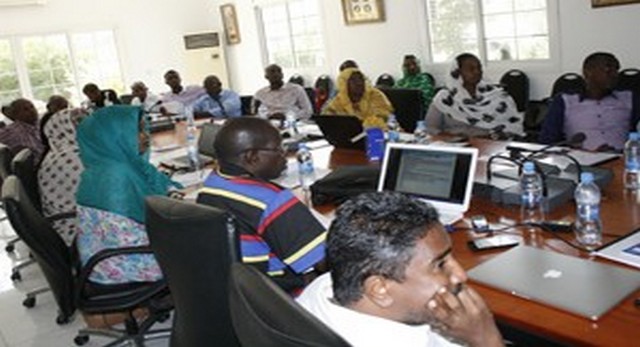
Launched in 2018 as part of the national “Zero Slums” program, the Integrated Urban Development Project (PDUI) is not only transforming the urban landscape of informal settlements in the Balbala district but also improving the daily lives of residents in the beneficiary areas. From PK 12 to Layabley and Moustiquaire, passing through Wahlé Daba, the transformation is spectacular. Funded by the French Development Agency (AFD) and implemented by the Djiboutian Agency for Social Development (ADDS), this multidimensional project combines opening up isolated areas, installing socio-economic and security infrastructure, strengthening the capacity of local associations, and improving the living conditions of residents—priority concepts of Djibouti Vision 2035, initiated by the President of the Republic, His Excellency Mr. Ismaïl Omar Guelleh.
Droughts caused by climate change have triggered a significant rural exodus in Djibouti. This phenomenon is particularly evident in several areas of the Balbala district, which experienced rapid urbanization immediately after the country’s independence in 1977. Today, this district concentrates more than half of the capital’s population and is home to some of the most critical situations in terms of poverty and access to essential services. The neighborhoods of PK 12, Wahlé Daba, Layabley, Moustiquaire, and their surrounding areas are among them. Urbanized spontaneously, often outside of any regulatory framework, these neighborhoods were among the most vulnerable. Residents faced precarious living conditions, insecurity, and, in particular, unemployment.
Faced with this worrying situation, the Djiboutian government, recipient of a €5.5 million grant from the French Development Agency (AFD), is launching a large-scale program called “Zero Slums.” Implemented by the Ministry of Urban Development and Housing, the initiative is part of Djibouti Vision 2035, championed by the President of the Republic, His Excellency Mr. Ismaïl Omar Guelleh, with the aim of eradicating informal settlements in the capital by 2035. Its implementation has been entrusted to the Djiboutian Agency for Social Development (ADDS), an institution under the supervision of the Ministry of Social Affairs and Solidarity (MASS), specializing in the execution of the government’s social projects.
It was within the framework of this tripartite partnership that the idea of Integrated Urban Development (PIUD) emerged. The project encompasses a series of actions responding to the needs expressed by the population in the socio-economic and security fields, as well as in the fight against youth and women’s unemployment.
“Here we are dealing with an integrated project, it is not just about building infrastructure, there is community development, there is social development, there is capacity building for elected officials, there is good governance,” explains the Director General of ADDS, Mahdi Mohamed Djama, in a video published by the AFD on YouTube.
After a successful pilot phase in 2008 at PK12, the model confirmed its relevance and effectiveness at Wahlé Daba, four years later.
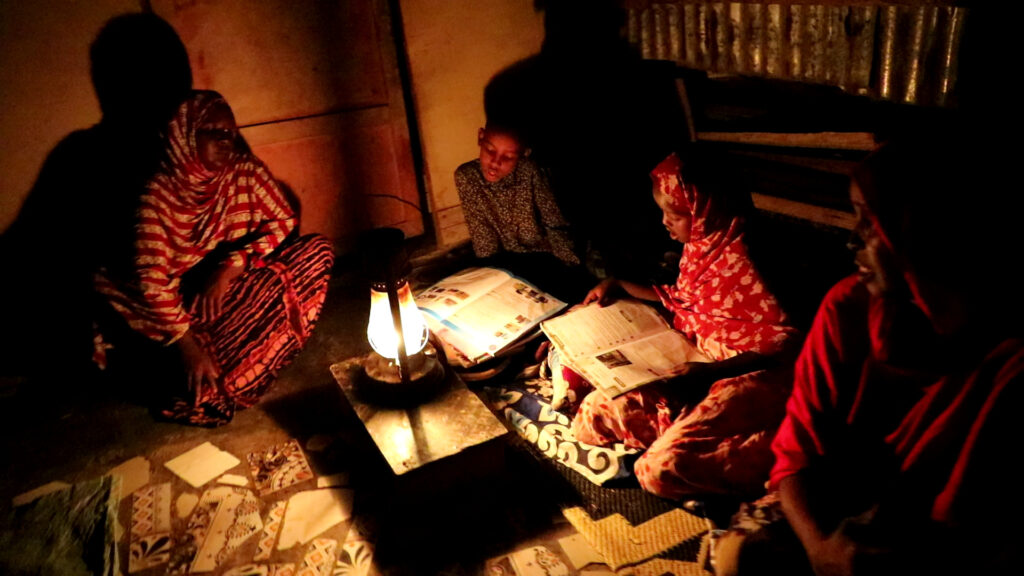
“Before, we lived in poverty. There was no electricity, no running water, no sanitary facilities, and home births were frequent. Thanks to this project, we finally have access to all these essential services,” testifies Kadra Darar, a resident of the Wahlé Daba neighborhood.
“When we first moved to this neighborhood, we used a 500-meter pipe and had to get up around 2 a.m., sometimes even 3 a.m., to get water. But today, tap water flows at my house,” confirms her neighbor Mariam Ahmed.
“The time when the inhabitants of Wahlé Daba were deprived of basic infrastructure is now over. Currently each family has its own connection to the drinking water distribution network and each household has access to electricity,” says the president of the Balbala commune at that time, Youssouf Nouho Hassan, in the same video.
After the PDUI in Wahlé Daba, it’s time for PDUI 2 for Layabley and Moustiquaire
Building on the success of the PDUI, ADDS is launching a second edition of this project for other disadvantaged neighborhoods in Balbala. Under the supervision of the Ministry of Urban Planning and Housing, as well as the Ministry of Social Affairs and Solidarity, this new phase targets a vast area of 250 hectares located west of Balbala, including the neighborhoods of Layabley and Moustiquaire.
Indeed, a study conducted by the URBAPLAN/ICCA consortium, funded by the AFD (French Development Agency), reveals that “nearly 85% of the housing in these neighborhoods consists of makeshift shelters made of corrugated iron, wood, or sometimes tents. Their occupants lack basic infrastructure such as roads, water, and electricity. Less than 15% of households have a connection to the drinking water network or a land title, and less than 2% own a vehicle. Social and security infrastructure is virtually nonexistent.” This assessment highlights the extreme precariousness of the area, which now represents a priority zone for intervention.
From this observation came PDUI 2, a project even more ambitious than its predecessor, which combines opening up access, social development and economic integration.
Convinced of the success of the initial project implemented in Wahlé Daba, the AFD, a strategic partner of the Djiboutian government in this poverty reduction program, renewed its confidence by granting €6 million in funding in January 2018, equivalent to over 1.245 billion Djiboutian francs, to carry out this second phase.
Following feasibility studies, the identification and establishment of a steering committee, discussions with beneficiaries, the formation of a neighborhood committee to gather specific expectations and needs, the development of the cadastral plan, etc., ADDS unveiled the ins and outs of PDUI 2 to its technical and financial partners on December 20, 2020, before officially launching the work on this large-scale project in 2021.
Two years later, the transformation is spectacular. The achievements of PDUI 2 and its extension, PDUI 2 bis, are numerous. The small paths between houses have given way to major roads, such as Boulevard Assamo (known as the “60-meter axis”), and the connecting road between Avenue Mouhoulé and Boulevard Gagaddé, linking Layabley and Moustiquaire to the main thoroughfares of Balbala. Public lighting has pierced the darkness of the nights, bringing safety and dignity to the residents.
Culverts have been built to cross the ravines and facilitate traffic flow, particularly during the rainy season. Two pedestrian bridges now allow residents to more easily reach schools and public facilities in the area.
But that’s not all; the change is even more profound. Underground, drinking water pipes have been extended, finally giving hundreds of families access to this precious resource. The achievements in this area are also enormous. “3 km of primary network, 3.3 km of secondary network, added to approximately 450 tertiary connections, including 250 social connections,” according to ADDS officials. Electricity, long inaccessible, is now also delivered directly to homes. The final phase of the PDUI 2 project and its extension, PDUI 2 bis, have resulted in numerous bioclimatic public infrastructures. Among these features are a community development center of approximately 1,500 m², green spaces, a gendarmerie brigade for enhanced security, built on a 600 m² site, mixed-use commercial facilities including shops and stalls housed in a 1,700 m² market hall, two 450 m² children’s playgrounds, three 1,000 m² multi-sports fields, one of which includes changing rooms and a privacy screen reserved for women, two waste collection points, and even a 300 m² platform allowing two pétanque matches to take place simultaneously, as well as several bus stops, some equipped with kiosks. These developments promote social cohesion, stimulate the local economy, and revitalize public spaces.
A Community Development Fund to strengthen the sector’s associative fabric
It is worth noting that one of the distinctive features of PDUI 2 remains its community-based approach. PDUI 2 and its extension, PDUI 2 bis, are not only intended to establish public facilities; they also include a social component, funded by approximately 40 million CFA francs from the Community Development Fund (FDC). This funding strengthens the capacities of some fifty youth and women’s associations in these neighborhoods.
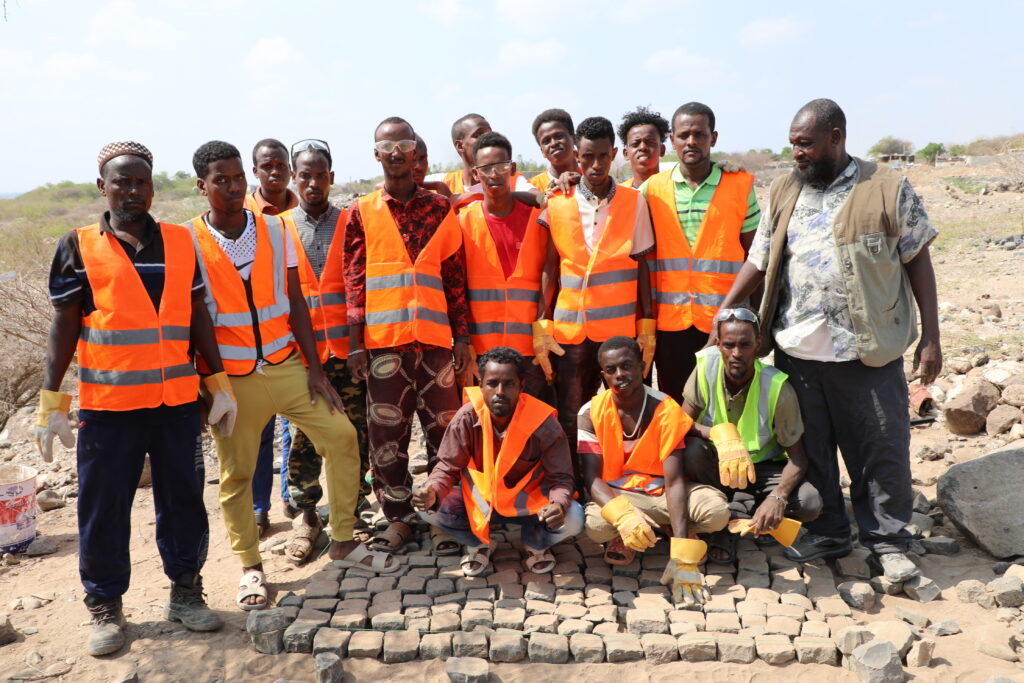
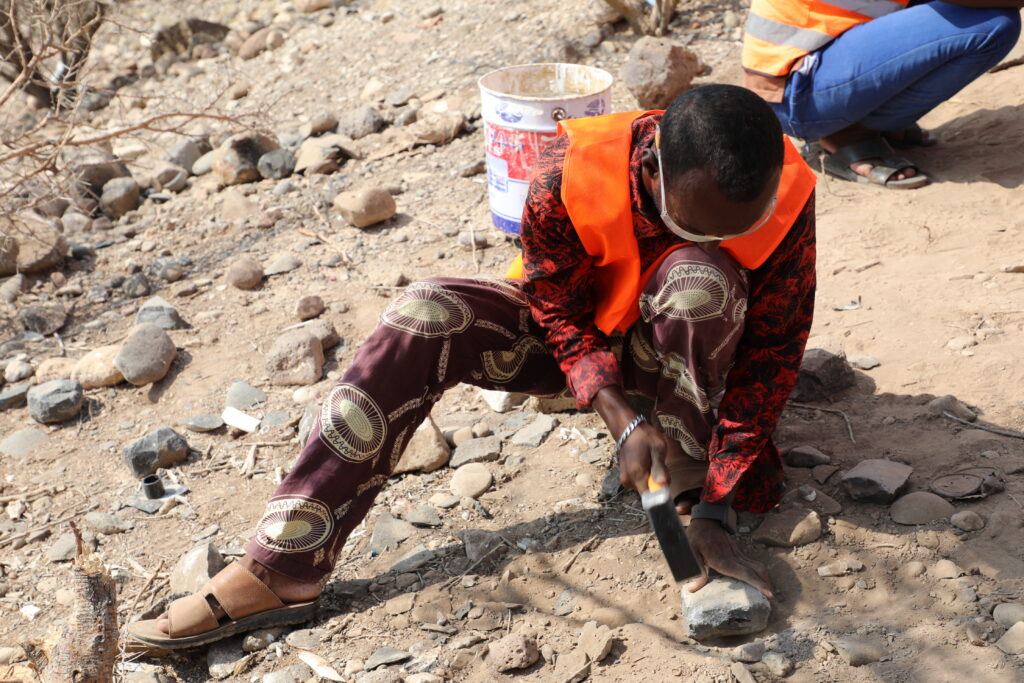
Thanks to this fund, ADDS has implemented over thirty community projects, some of which have facilitated access to drinking water, improved hygiene and public health through the rehabilitation of individual sanitation systems, the planting of several hundred Somali Nyme trees, and the implementation of numerous awareness campaigns on hygiene and the fight against drugs. Some associations have also focused on promoting youth empowerment by offering new opportunities and developing technical skills such as training in stone cutting and laying, as well as driving various types of vehicles, which has enabled 72 young people from the beneficiary neighborhoods to obtain their driver’s licenses.
And to mitigate the high unemployment rate in this sector, ADDS, in collaboration with MENFOP, CASAF and the Chamber of Commerce, has trained several hundred young men and girls, out of school, in trades adapted to the needs of the territory such as welding, electricity, refrigeration and electrical work, carpentry, secretarial/documentation work, masonry, hairdressing, sewing, cooking, but also income-generating activities management…etc.
These two aspects reflect a shared ambition: to open up outlying neighborhoods, improve living conditions, and strengthen the economic and community capacities of the population. Beyond infrastructure, they lay the foundations for urban planning where every resident becomes an agent of change.
In Balbala, and more specifically in the Layabley and Moustiquaire districts, beyond the infrastructure, collective dynamics more deeply rooted in the social fabric are emerging.
Between hope for a better living condition and resilience, the Integrated Urban Development Project 2 and its complementary extension (the PDUI2 bis) whose works were completed in 2024, lay the foundations for the future urban aesthetics of the Djiboutian capital.