Long perceived as an environmental scourge, plastic is on its way to becoming a strategic resource in Djibouti. Buildings with walls made of recycled plastic bricks, at the headquarters of ADDS, OVD, MENFOP, UNICEF, as well as at the DECAN animal shelter site about ten kilometers from the city center, are concrete examples of the success of the recycling project.
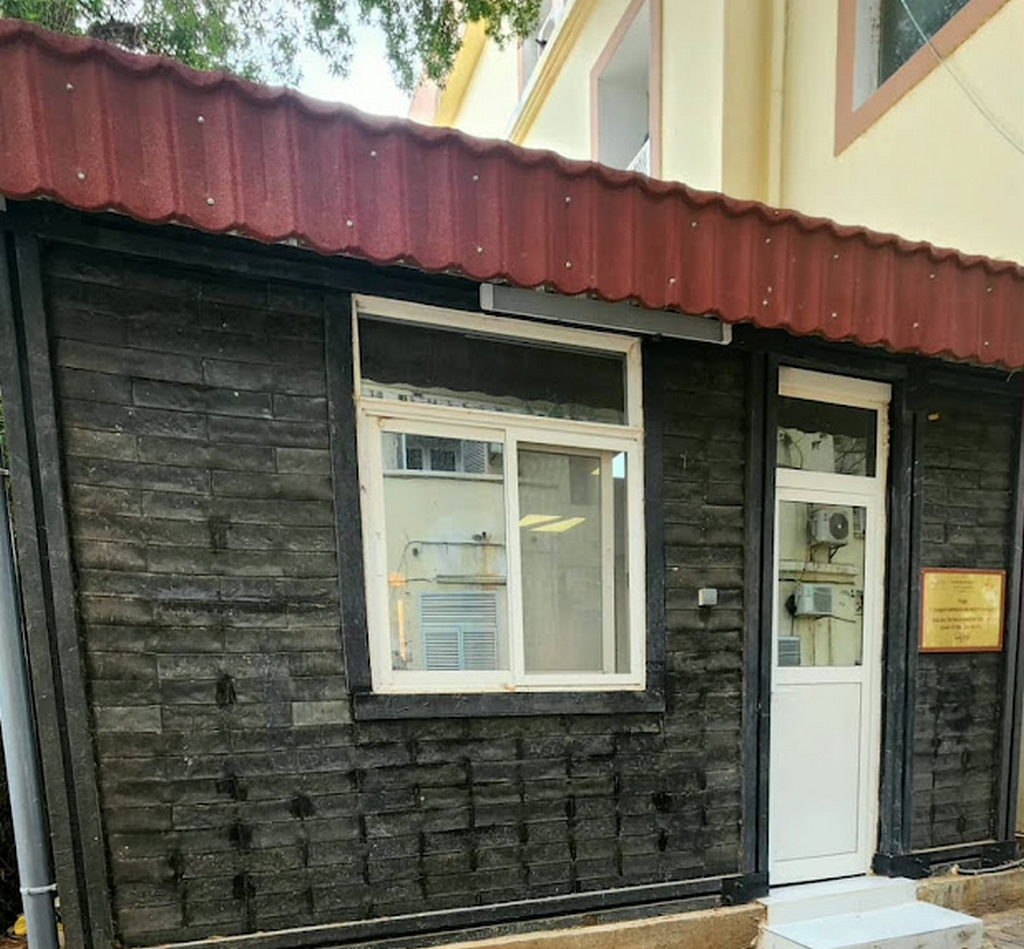
Behind the administrative building of the Djiboutian Agency for Social Development (ADDS), a room with black walls catches our eye. “The walls of this room are entirely constructed from bricks made from plastic waste,” says Mahdi Mohamed Djama, Director General of ADDS, with satisfaction, pointing to the building that serves as an office for one of his teams. At first glance, they look just like regular bricks. Yet these walls are made of recycled plastic. This pilot project is a source of pride, representing, for the first time in the country, a concrete solution to a major environmental problem.
“The recovery of plastic waste plays a central role, both for the protection of the environment and for the creation of jobs,” emphasizes Mahdi Mohamed Djama , Director General of ADDS.
Curiosity compels us to push open the door of this room whose walls are entirely made of plastic bricks. The room is air-conditioned. The atmosphere is pleasant. “It doesn’t let the cold out,” a technician replies from behind her computer to my question, “Isn’t it very hot?”
Because behind these unique walls lies a much broader ambition. “The recovery of plastic waste plays a central role, both for environmental protection and for job creation,” emphasizes the managing director. In his view, recycling is no longer limited to an ecological solution: it is becoming a genuine driver of economic and social development.
According to Mahdi Mohamed Djama, Director General of ADDS, the initiative is rooted in a proven African experience. In June 2023, a Djiboutian delegation comprised of senior officials from ADDS, the Djibouti Roads Authority (OVD), the Ministry of National Education and Vocational Training (MENFOP), and the Ministry of the Environment and Sustainable Development (MEDD) traveled to Côte d’Ivoire. In Abidjan, they discovered an operational model for transforming plastic waste into robust and durable building materials.
Initiated and funded by UNICEF, with the participation of the International Organization for Migration (IOM), this mission allowed the delegation to immerse themselves in the entire process: collection, sorting, processing, and use of recycled plastic in construction. It was a revelation. What had previously seemed utopian suddenly became a reality in Djibouti.
Back in the country, the partner institutions undertook a technical and economic feasibility study. The results were conclusive: locally produced bricks showed superior resistance to traditional materials, particularly in the face of high temperatures, while maintaining a controlled production cost.
“The walls of this room are entirely constructed from bricks made from plastic waste,” says Mahdi Mohamed Djama , Director General of ADDS, with satisfaction.
The partners quickly moved from theory to practice. Several pilot constructions were built, notably at the headquarters of ADDS, OVD, MENFOP, UNICEF, as well as on the site of the DECAN animal shelter in Douda, about ten kilometers from the city center.
These buildings serve as full-scale laboratories. Their behavior in the face of inclement weather, extreme heat, and the wear and tear of time is meticulously observed. The findings are encouraging: solidity, durability, and harmonious integration into the urban environment.
Faced with these compelling results, enthusiasm is palpable. ADDS, which receives funding from UNICEF as part of the project to support the implementation of the Gender Action Plan, is now considering a larger-scale deployment.
Heading towards industrialization with the future CET
The next step is already mapped out. The plastics recycling project is slated to be integrated with the construction of the future Chebelley Landfill Center (CET), work on which began a few months ago. Funded by the European Union and France through the French Development Agency (AFD) to the tune of €16 million, this center represents a strategic link in Djibouti’s waste management system.
The ambition is clear: to establish an industrial unit for processing plastic waste near the CET. This integrated approach would drastically reduce plastic pollution while supplying the construction sector with innovative and bioclimatic materials.
Bricks, paving stones, school supplies… the potential applications are numerous. But the social impact is just as significant. The project promises to create many jobs, particularly for waste pickers, whose working conditions could be significantly improved thanks to a more structured sorting and collection system.
In the long run, what society rejected yesterday becomes today a raw material for sustainable development.
The initiative is also beginning to attract interest beyond Djibouti’s borders. In February 2025, a German entrepreneur specializing in recycling visited Djibouti. Impressed by the project’s rapid progress, he expressed his desire to establish a production unit in partnership with local authorities. Discussions are underway with the ADDS (Djibouti Development Agency), the OVD (Office of Roads and Drainage), and UNICEF.
Meanwhile, the IOM (International Organization for Migration) is supporting similar projects in the region, notably in Obock. Two exchange missions, to Abidjan and Dakar, allowed local authorities to learn from other successful African experiences in waste recovery.
Beyond the technical achievement, this project embodies a broader vision: that of a circular economy adapted to the realities of Djibouti. Every discarded bottle, every discarded bag can now become a brick. This is a concrete response to plastic pollution, but also to the fight against greenhouse gas emissions, by limiting waste incineration and landfilling.
In Djibouti, plastic walls are the first tangible signs of a future where environmental innovation and human development advance hand in hand.
By RACHID BAYLEH : https://rachidbayleh.blogspot.com/2026/04/a-djibouti-des-murs-surgisent-des.html