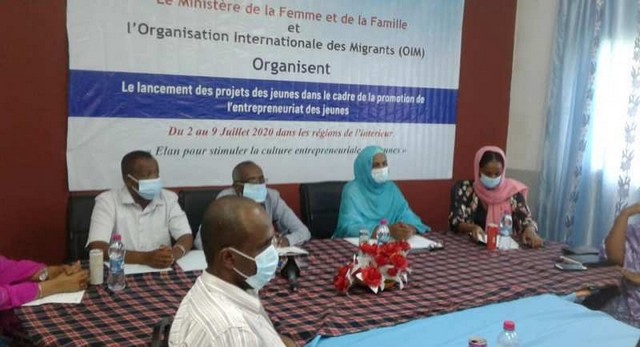
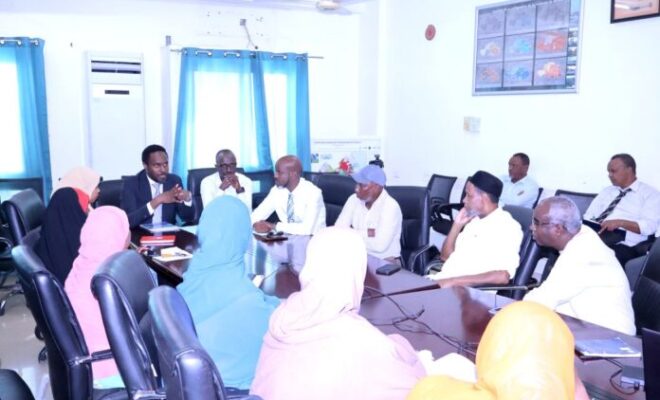
For two decades, the government, with the help of its partners like the UNDP, has made literacy a priority for women. The Ministry of Women and the Family and the National Union of Djiboutian Women are on all fronts in order to lift as many women as possible out of illiteracy. A program that is working quite well and has enabled thousands of adult women to discover the pleasures of reading and writing and to emerge from the shadows of illiteracy.
First of all, a brief historical reminder is in order. Since gaining independence in June 1977, the Republic of Djibouti has given an important place to the fight against illiteracy, and particularly that of women. The first literacy campaigns were initiated around the 1980s in Djibouti by the National Union of Djiboutian Women (UNFD). From 1991 to 1999, six national campaigns lasting at least 6 months were carried out by MENESUP and UNFD with the support of UNICEF and the ADB, which reached 7,500 literate people according to the study of the state of literacy in 2009.
Between 2000 and 2009, larger and larger campaigns led by the Ministry for the Advancement of Women with funding from the IDB and ADDS enabled 19,500 women to be literate.
A functional education strategy comprising a three-level program has been set up and the preparation of manuals for learners, the development of teachers’ guides and the organization of training sessions for the benefit of trainers, the annual organization assessment tests to measure the knowledge and skills of beneficiaries and the translation of textbooks into national languages. All ministerial departments and civil society have been mobilized to participate in the national effort to educate women. For the MFF and the UNFD, the aim here is to improve the quality of adult education in general and thereby reduce the illiteracy rate of young girls by 50% and of the country’s women by 2025.
Mr. Abdillahi Omar Ibrahim, former inspector of national education works as a consultant with the Ministry of Women and the Family. He developed this new national adult literacy strategy, which is of capital importance for the socio-economic development of the Djiboutian population. According to this education expert: “Raising the level of education of our mature fellow citizens in vulnerable situations through effective literacy on a large scale is investing in the future. Because it is commonly recognized that a country cannot claim to be competitive in the context of globalization if its population is predominantly illiterate. “
“This national literacy strategy is part of the 2035 vision. Its objective is, on the one hand, to educate the greatest number of Djiboutians in general and, on the other hand, to greatly reduce the illiteracy rate in particular. women.”.
Ibado, in her fifties, with a sharp gaze, is one of those women who have benefited from this literacy program. Today she too feels invested with a mission: to in turn train her compatriots who have not had the opportunity to follow this program.
“By the grace of God I am independent because I manage my shop alone and write all expenses and receipts. Previously I used the service of my children to keep the accounts. I intend to pass on what I have just mastered, ”she says with a smirk.
Djibouti aims to lift 12,000 women out of illiteracy per year, according to the Ministry of Women and the Family. “Women are the core of national development. This is why the literacy of adult women is essential for the economic growth of the country, because it allows them to develop their skills, build and strengthen their economic independence ”, according to the same source.
The social and economic benefits of literacy programs have long been known. Children of literate parents are more likely than others to access education. A child whose mother can read is 50% more likely to survive past his fifth year. As for women who have assimilated the basic skills of reading and writing, they more easily develop an economic activity that allows them to better meet the needs of their families (care, hygiene). A literate woman is worth two, one might say.
As part of a program entitled “Consolidation of the empowerment of women and girls”, the Ministry of Women and the Family with the assistance of the UNDP and the financial support of the European Union has given itself as objective of reducing gender disparity and strengthening the integration of women. It includes a national literacy program, training and support aimed at the economic empowerment of women. The gender observatory is strengthened, quality planning services are available and used by the beneficiaries under this program.
“This project covers peri-urban areas around Djibouti-ville and rural areas in the five regions of the interior of the country where the degree of inequality and vulnerability is particularly high. Can we read on the document signed between the MFF and the UNDP.
The overall objective of this project is to reduce gender disparity through support for the implementation of policies of the Ministry of Women and the Family (MFF) in terms of gender integration. It is part of the European Union’s gender policy, is part of the National Indicative Program of the 11th EDF and will contribute to the implementation of the National Gender Program of the Republic of Djibouti. It will contribute to the sustainable development goals of Agenda 2030, in particular Goal 5 (achieve gender equality and the advancement of women and girls). Other objectives will be: objective 3 (health and well-being),
4 (quality education), 8 (decent work and economic growth), 10 (reduced inequalities), 11 (sustainable cities and communities) and 16 (peace, justice and strong institutions.
The target beneficiaries of this project are mainly vulnerable women and girls residing in peri-urban and rural areas who will need to be empowered and better protected.
All these government efforts to educate women demonstrate, if need be, that women’s education is a priority. A merciless struggle is waged to overcome the illiteracy which affects a large segment of the female population.