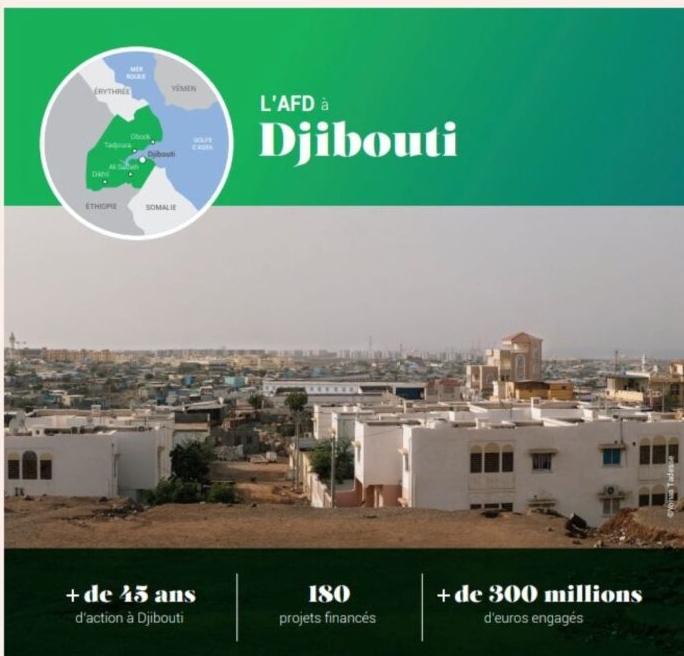
Present in Djibouti since 1974, the French Development Agency (AFD) is one of the country’s long-standing partners. For over fifty years, it has supported the Djiboutian authorities and local stakeholders in implementing structuring projects aimed at sustainably improving the living conditions of the population.
Towards a more resilient, inclusive and future-oriented city
Whether it’s the construction of waste collection points in Balbala, boreholes still in operation today, or support for the first private pediatric practice, the impact of these initiatives is still visible. Today, AFD’s work is fully aligned with Djibouti’s Vision 2035, which prioritizes national unity, good governance, social progress, accelerated economic growth, and regional integration. Urban and social interventions also fall within the framework of the Sustainable Development Goals (SDGs): reducing inequalities, ensuring equitable access to essential services, building sustainable and resilient cities, and promoting health and education for all.
AFD has also strengthened its commitment to sanitation issues, in close collaboration with ONEAD and in coordination and co-financing with the Delegation of the European Union, in order to sustainably improve access to water and wastewater treatment services.
An integrated and sustainable strategic approach
Since the 1980s, the French Development Agency (AFD) has supported Djiboutian urban public policies to address the challenges related to population growth, the rapid expansion of informal settlements, unequal access to essential services, and climate vulnerability. The projects supported have progressively incorporated a comprehensive vision: beyond infrastructure, the emphasis is placed on the social, economic, and community development of neighborhoods.
The key principles of our approach are:
– In-situ rehabilitation to preserve what already exists
– Land tenure security and participation of local stakeholders
– Integration of the needs of the population and authorities from the design stage
– A combination of basic infrastructure and public facilities with social and economic strengthening
Recent projects such as PDUI2 in Layabley and Moustiquaire combine modern infrastructure with climate resilience: water and electricity networks adapted to drought and flood events, green public spaces, and bioclimatic buildings. These projects contribute to local employment and economic development, while ensuring the long-term maintenance of the infrastructure.