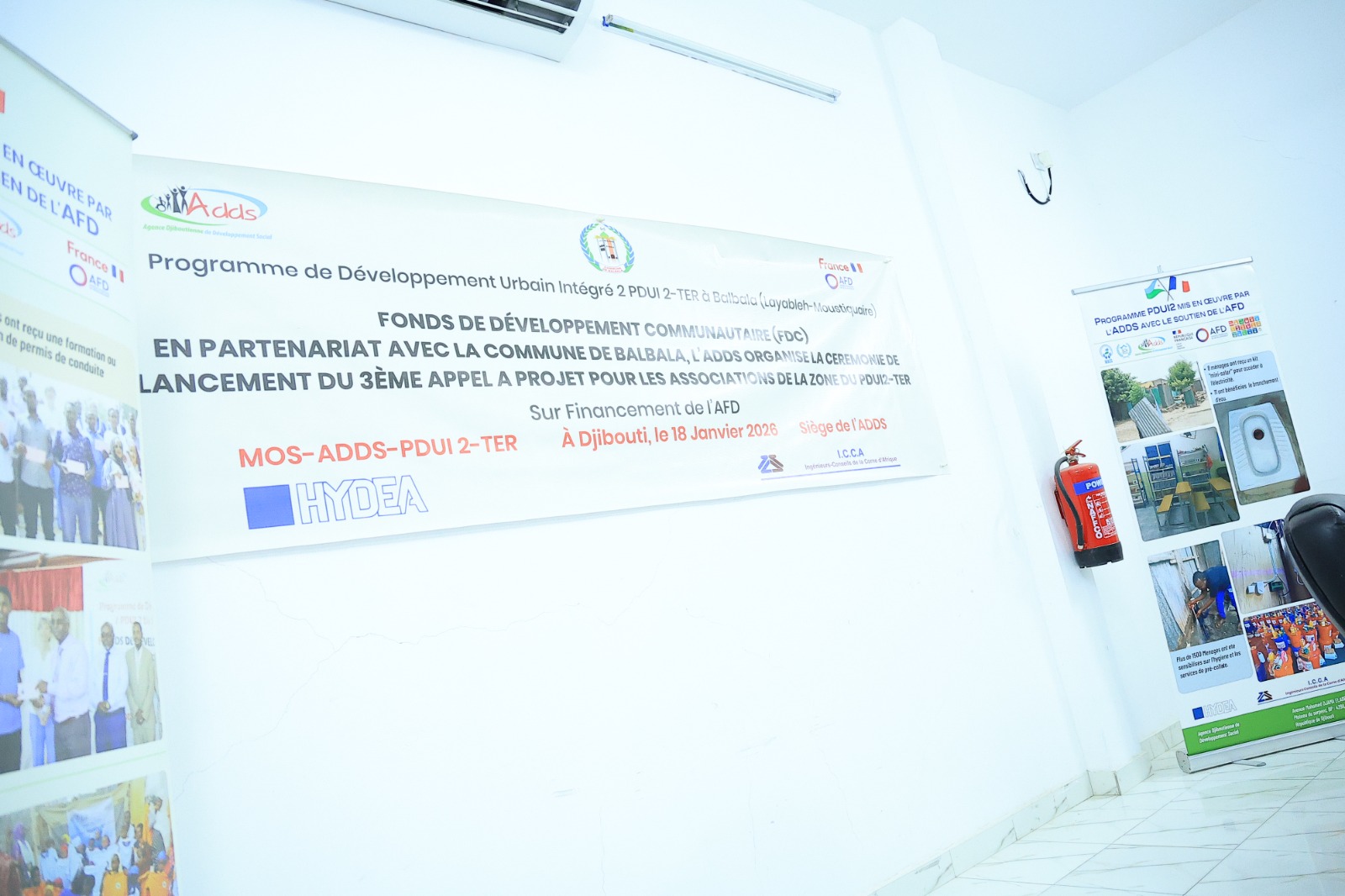
The Djiboutian Agency for Social Development (ADDS), in partnership with the municipality of Balbala and with financial support from the French Development Agency (AFD) through the Community Development Fund (FDC), launched the third call for projects for the Integrated Urban Development Program 2 ter (PDUI 2ter) yesterday morning. This initiative offers hope, citizen participation, and sustainable transformation for the Layabley and Moustiquaire neighborhoods.
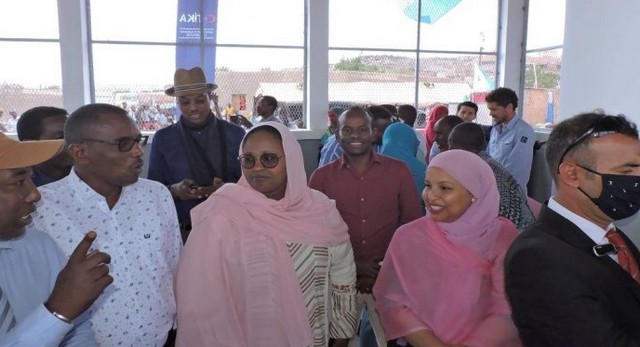
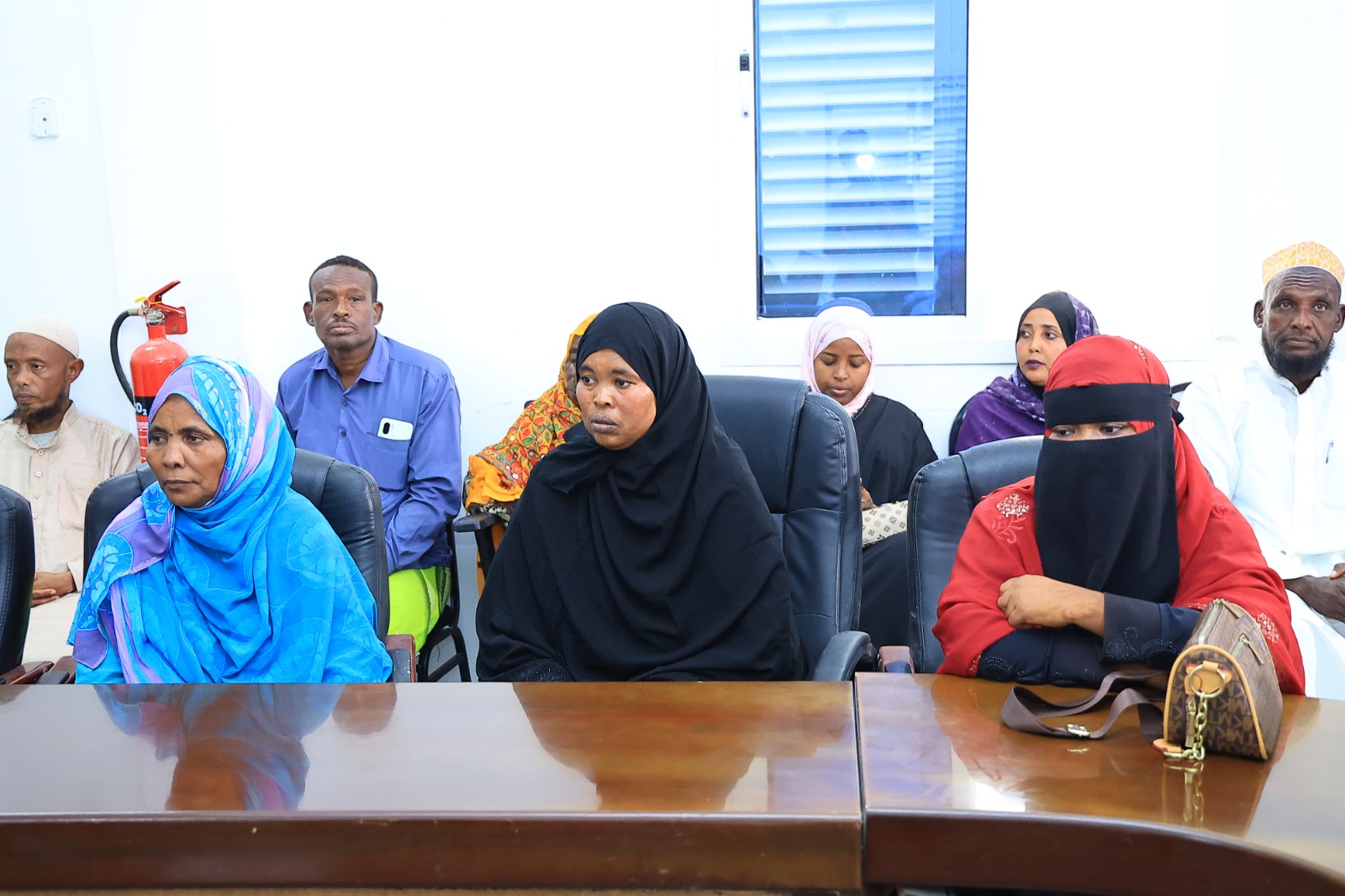
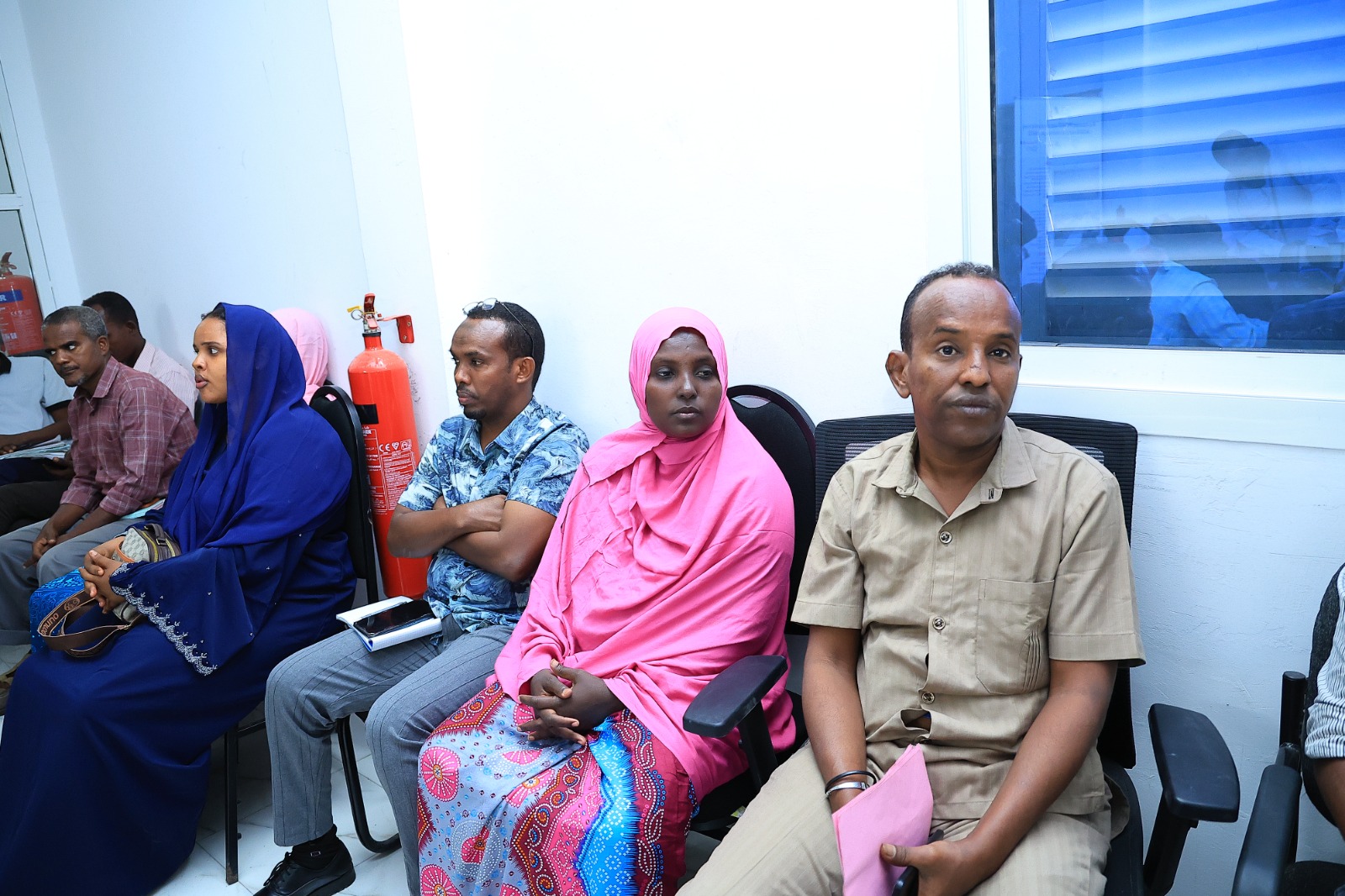
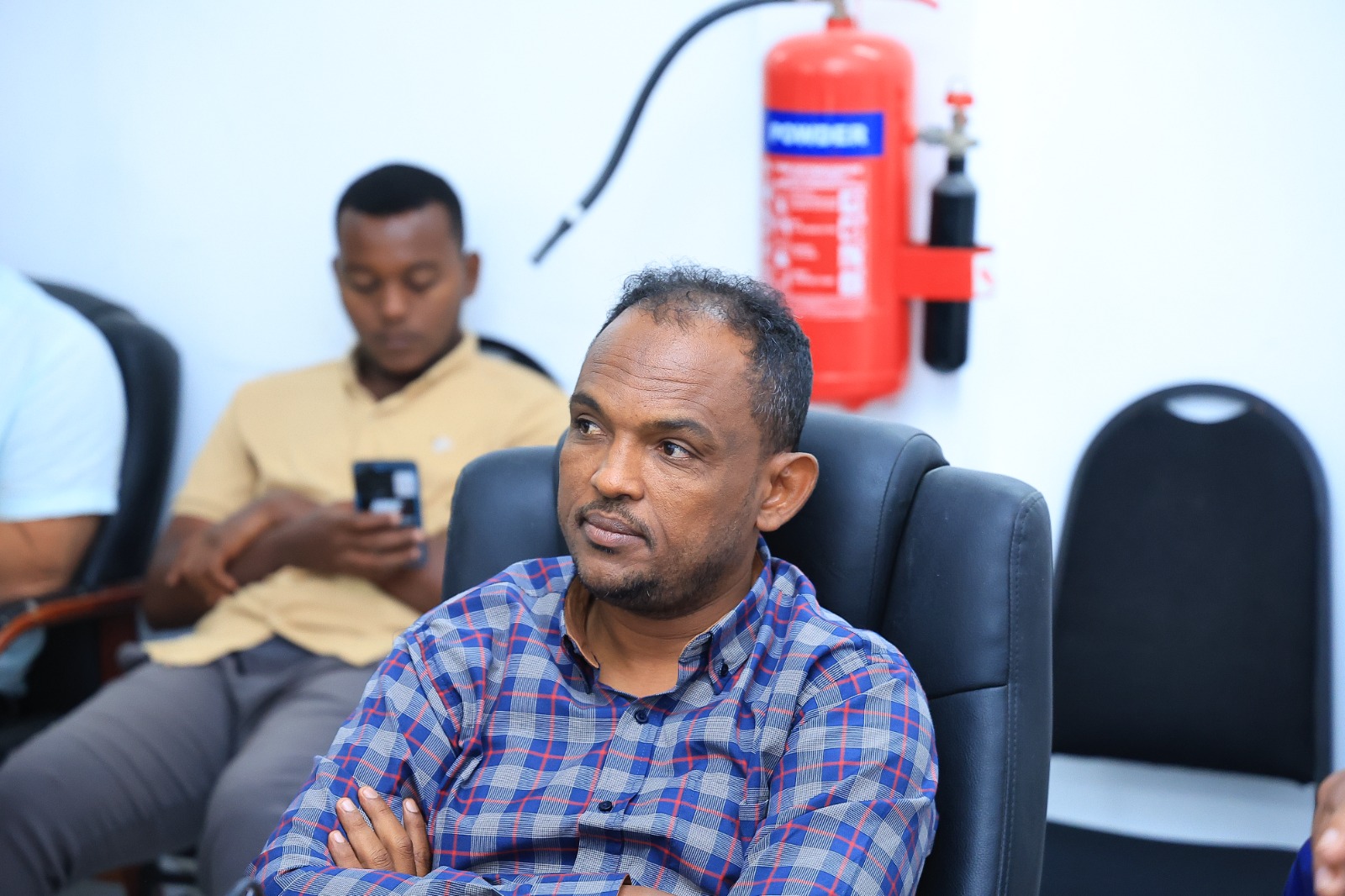
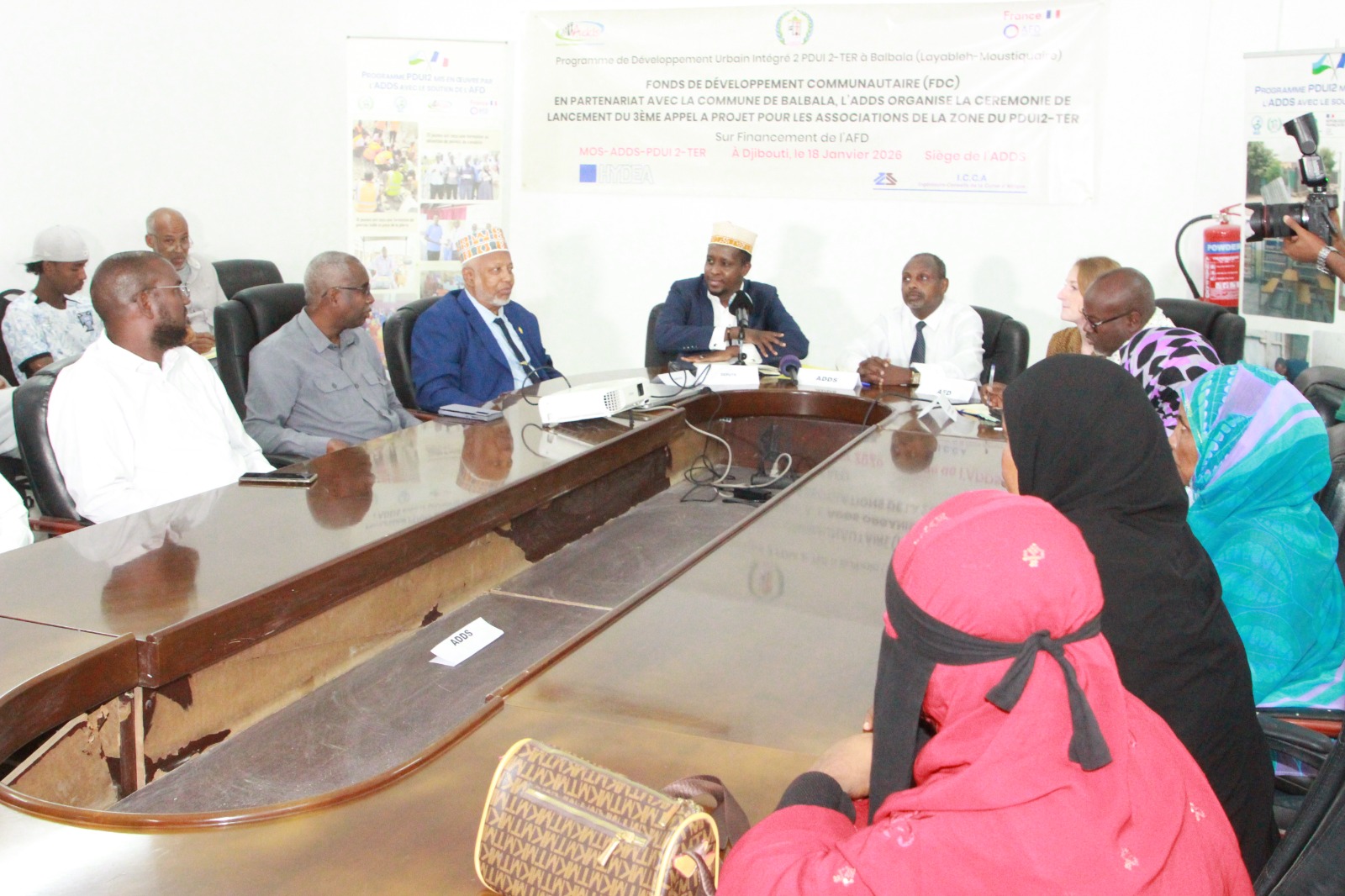
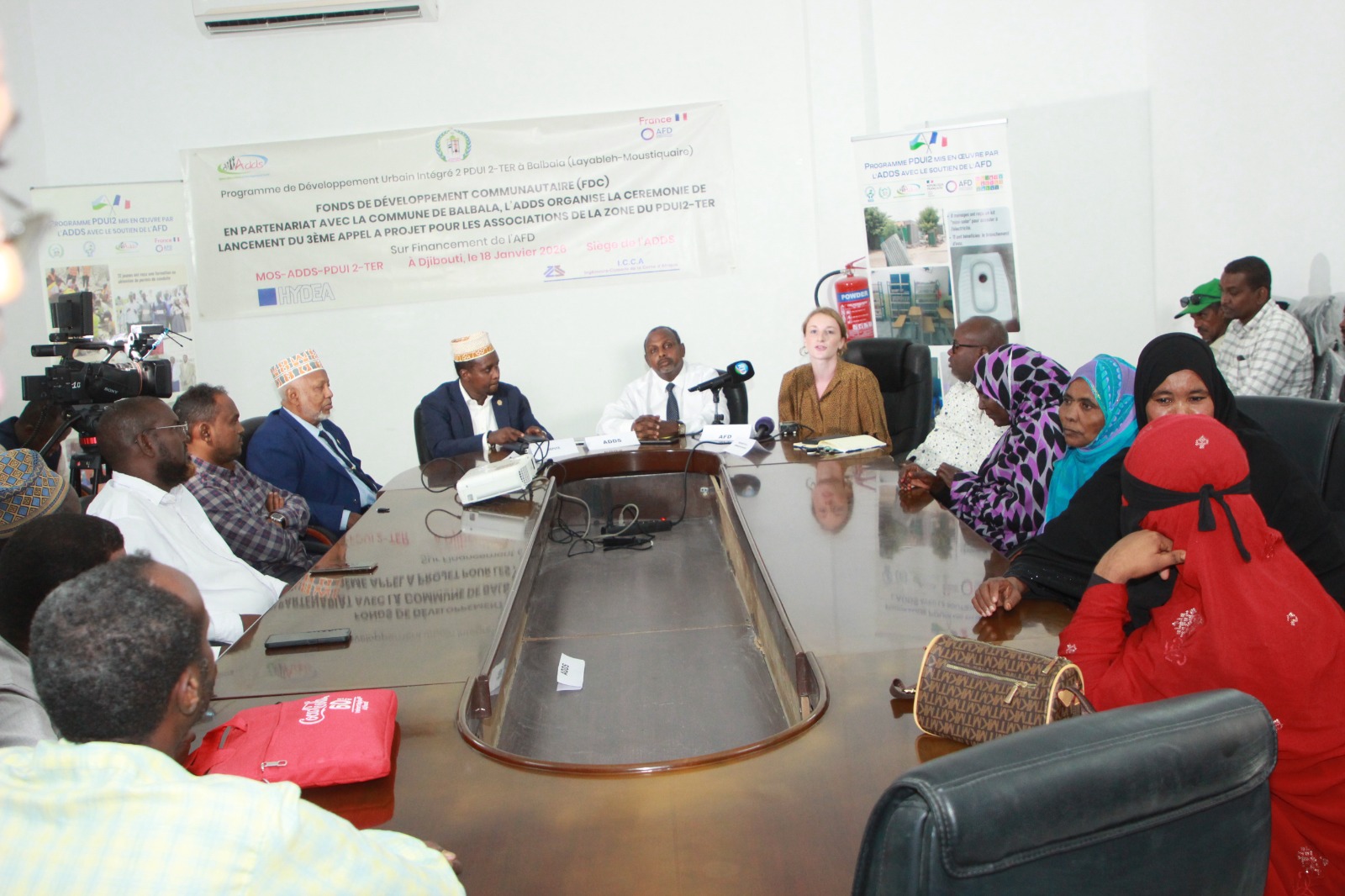
In the large meeting room at ADDS headquarters, the atmosphere was both studious and enthusiastic. Alongside institutional representatives and technical and financial partners, spokespeople from 37 local associations in the Layabley and Moustiquaire neighborhoods were present to mark the launch of the third call for projects from the Community Development Fund, part of the third phase of PDUI 2, commonly known as PDUI 2ter.
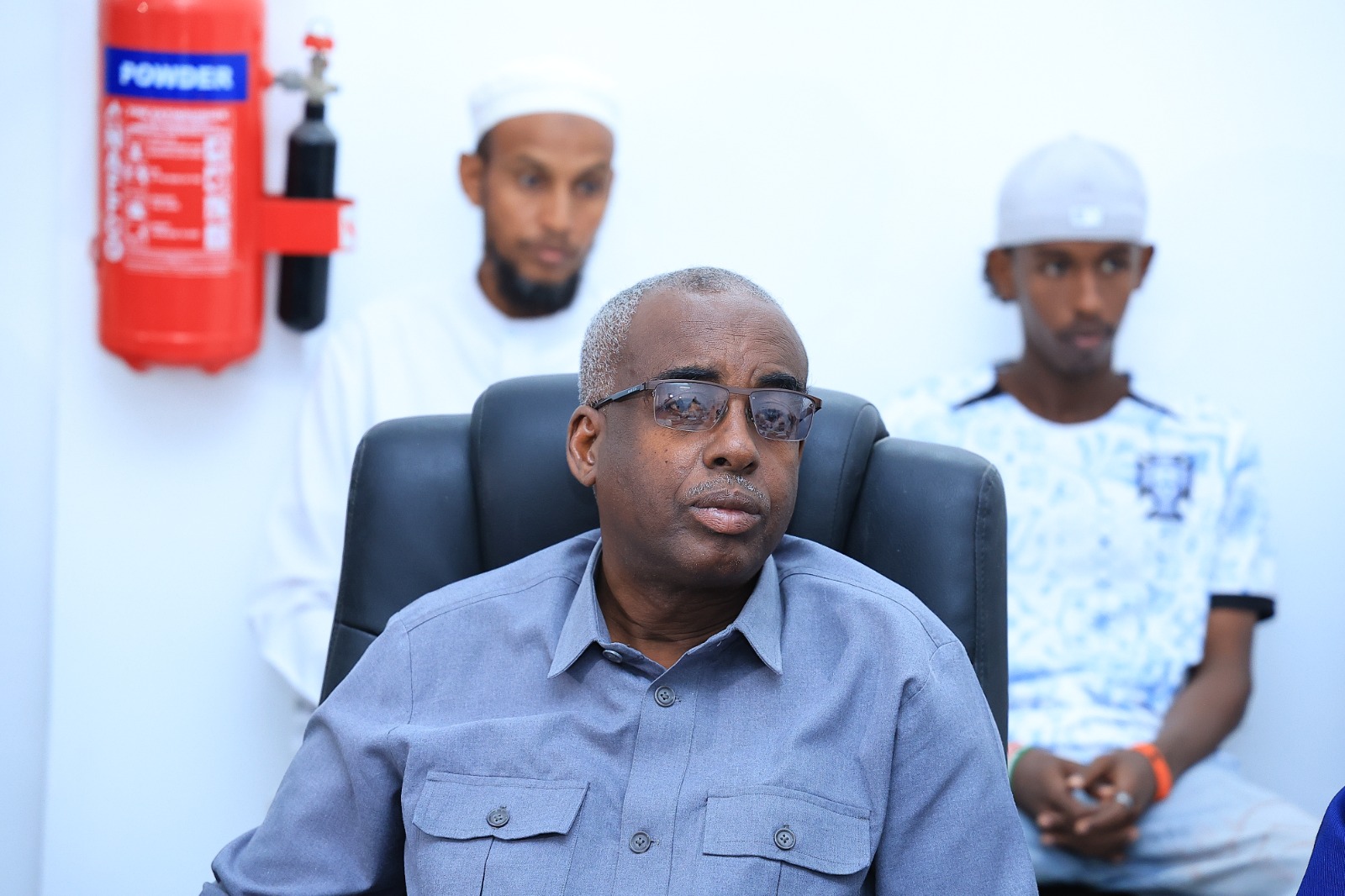
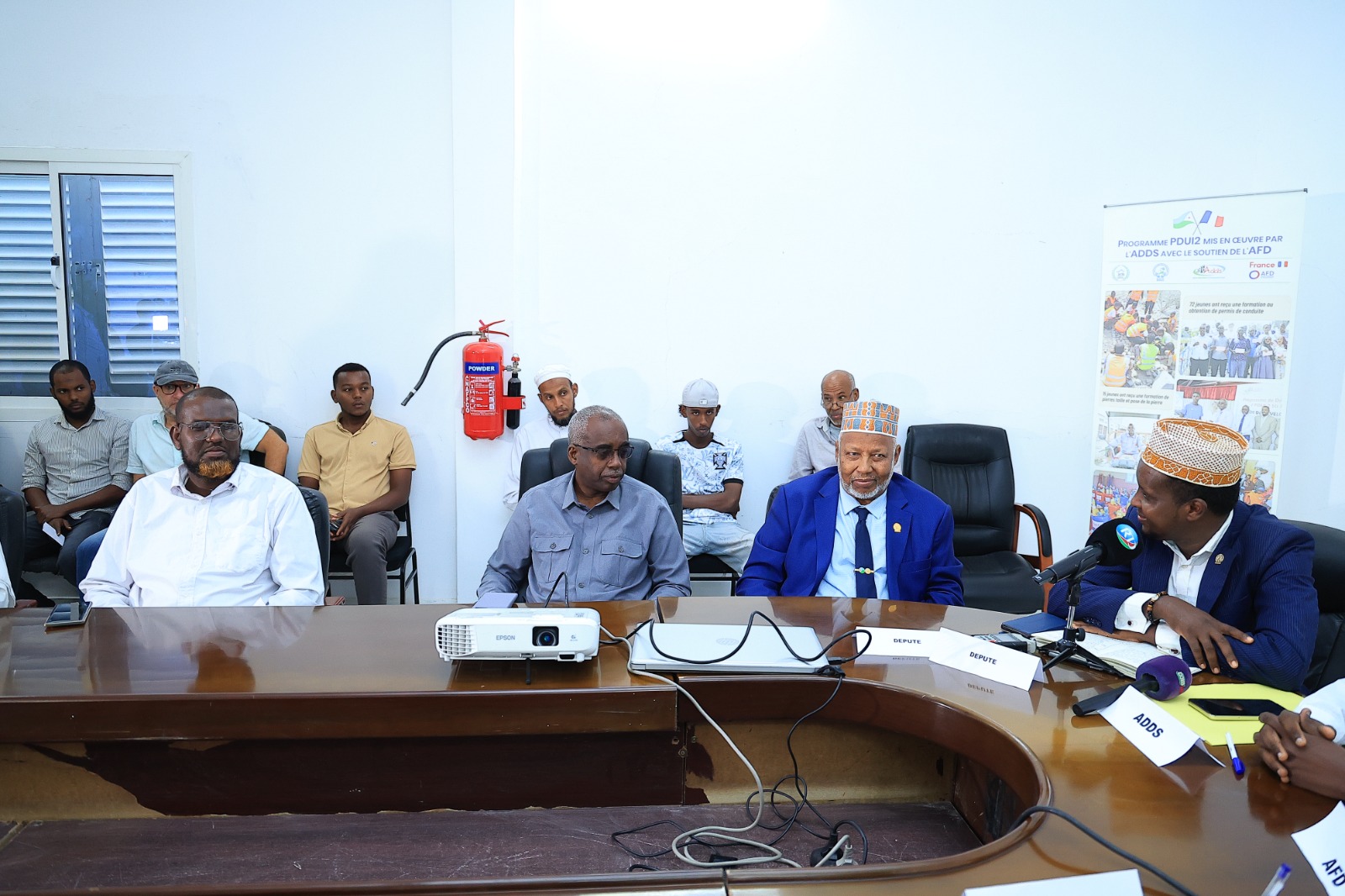
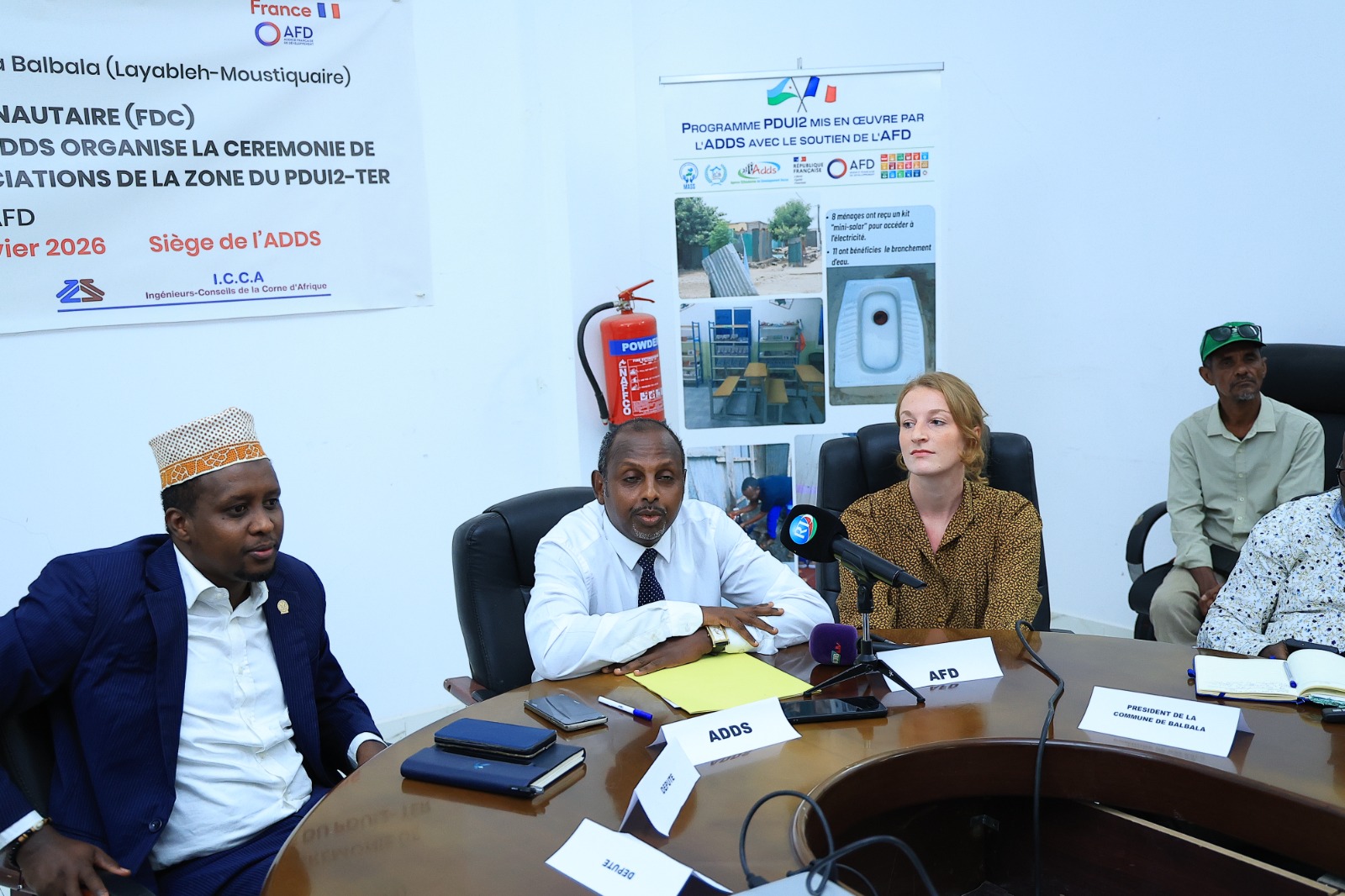
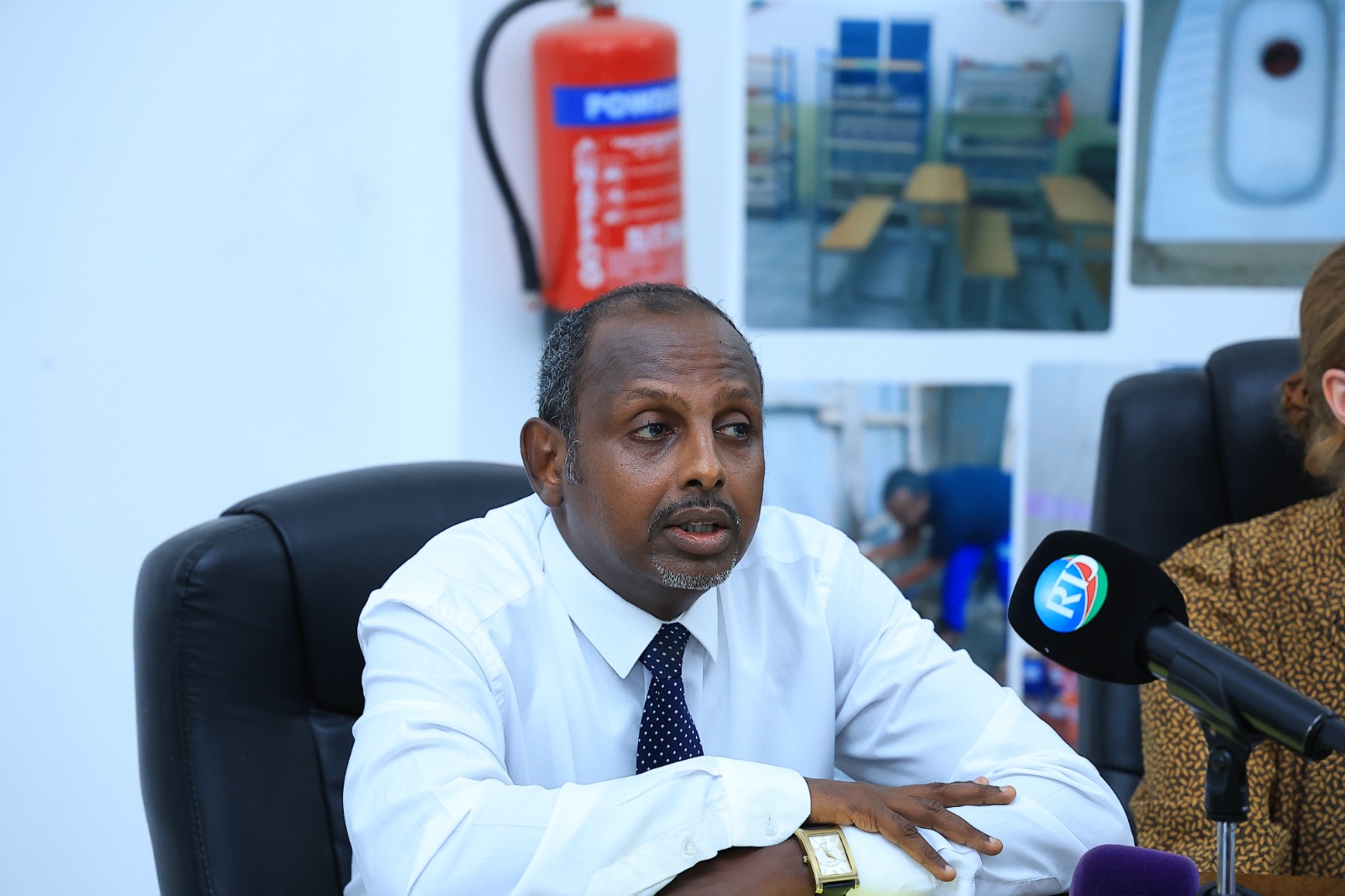
The ceremony took place in the presence of, among others, the Director General of ADDS, Mahdi Mohamed Djama, the Director of Social Development at ADDS, Galab Hassan Galab, members of parliament Souleiman Daher Bileh and Abdourahman Awaleh Yacin, the Mayor of Balbala, Mohamed Hassan Saïd, and the AFD’s Integrated Urban Development Project Manager, Léa Turpain. Their presence testifies to the strategic importance given to this social and community program. PDUI 2ter builds on the previous phases of the Integrated Urban Development Program, which have significantly contributed to improving living conditions in several working-class neighborhoods of Djibouti. In Balbala, and more specifically in Layabley and Moustiquaire, the results are already visible: improved roads, strengthened basic infrastructure, targeted social initiatives, and, above all, increased involvement of local communities in defining their priorities.
A Structuring Program for the Layabley and Moustiquaire Neighborhoods
This third phase places particular emphasis on the social component, considered an essential pillar of sustainable urban development. Funded by the AFD’s Community Development Fund to the tune of approximately 40 million Djiboutian francs, this component aims to support micro-projects directly implemented by local associations, which are key intermediaries for the needs and aspirations of the population.
It is worth noting that yesterday was also dedicated to project development training for representatives of the 37 participating associations. This session, led by the ADDS teams and social project management (MOS) stakeholders, aimed to strengthen the associations’ capacities to enable them to design relevant, realistic projects aligned with the objectives of PDUI 2ter.
Participants were informed of the eligibility requirements, selection criteria, evaluation process, and detailed timeline. Of the 37 projects developed by the associations, only 20 will be selected, based on the relevance, expected social impact, feasibility, and sustainability of the proposed initiatives.
Aware of the challenges involved in developing structured projects, ADDS has highlighted the support mechanisms available: application assistance resources, capacity-building workshops, and ongoing technical support. This approach aims not only to fund projects but also to strengthen the local associative network.
Des engagements institutionnels forts pour un développement participatif
Lors de la cérémonie de lancement, les députés Abdourahman Awaleh Yacin et Souleiman Daher Bileh ont tour à tour souligné l’importance stratégique du PDUI 2ter. Ils ont mis en exergue son impact positif sur la qualité de vie des habitants, l’autonomisation des jeunes et des femmes, ainsi que sur la préservation de l’environnement urbain. Pour eux, ce programme incarne une nouvelle manière de penser le développement, fondée sur la proximité, l’écoute et la participation.
De son côté, le président de la commune de Balbala, Mohamed Hassan Saïd, est revenu sur les nombreuses activités déjà réalisées dans le cadre des phases PDUI 2 et PDUI 2 bis, rappelant que ces initiatives ont permis de poser les bases d’une transformation profonde et durable dans les quartiers Layabley et Moustiquaires bénéficiaires du PDUI 2.
Pour sa part, la chargée du PDUI à l’AFD, Mme Léa Turpain, a tenu à rassurer les associations et les acteurs locaux : « Cet appel à projets accompagne le PDUI 2 et ne sera pas le dernier ». Elle a souligné les transformations visibles observées ces dernières années dans les quartiers de Layabley et Moustiquaire, insistant sur l’importance d’accompagner ces changements afin que les habitants puissent se les approprier pleinement. « Pour nous, c’est très important d’accompagner cette transformation pour que les quartiers puissent s’approprier cette dynamique », a-t-elle déclaré, réaffirmant l’engagement de l’AFD aux côtés de Djibouti pour un développement urbain inclusif.
Moment fort de la cérémonie, le discours du directeur du Développement social de l’ADDS, Galab Hassan Galab, a rappelé la philosophie profonde de ce troisième appel à projets. Il a souligné que cette initiative dépasse largement le cadre administratif pour incarner une vision collective du développement participatif, où chaque habitant devient acteur du changement. Il a rappelé que les deux premiers appels à projets avaient permis la réalisation de 37 microprojets, touchant directement 6 048 bénéficiaires, preuve tangible de l’efficacité de l’approche participative adoptée. L’objectif de ce troisième appel est clair : toucher un nombre encore plus important de bénéficiaires, en ciblant notamment les zones et groupes de population encore insuffisamment couverts. S’adressant directement aux associations de Layabley et Moustiquaire, il a insisté : « Cet appel à projets est votre opportunité », avant de réaffirmer la disponibilité des équipes de l’ADDS et de la maîtrise d’œuvre sociale pour accompagner chaque initiative.
Bref, en plaçant les associations locales au cœur du processus, en favorisant l’appropriation communautaire et en s’appuyant sur des partenariats solides, ce programme confirme que le développement urbain durable est avant tout une aventure humaine, collective et inclusive.