Djiboutian Agency for Social Development

Top Menu

  • Français
  • English

Main Menu

  • Home
  • The Agency
    • From the General Manager
    • Presentation of the ADDS
    • Agency Organization
    • Institutional structure
    • Funding
    • Area of ​​intervention
    • Texts and laws
    • National partners
    • International partners
  • The Ministry
    • Presentation of the INDS
    • Context
    • Secretariat of state
  • News
  • Publications
    • Magazines @en
  • Contact Us
  • Français
  • English

logo

Djiboutian Agency for Social Development

  • Home
  • The Agency
    • From the General Manager
    • Presentation of the ADDS
    • Agency Organization
    • Institutional structure
    • Funding
    • Area of ​​intervention
    • Texts and laws
    • National partners
    • International partners
  • The Ministry
    • Presentation of the INDS
    • Context
    • Secretariat of state
  • News
  • Publications
    • Magazines @en
  • Contact Us
News
Home›News›“The solidarity we intend to promote is first and foremost a solidarity of local communities,” President Ismail Omar Guelleh

“The solidarity we intend to promote is first and foremost a solidarity of local communities,” President Ismail Omar Guelleh

By Connex Design
29 January 2026
112
0
Share:

Last Thursday, at the People’s Palace, President Ismail Omar Guelleh officially launched the 2026 National Solidarity Week. In a speech with strong social and political implications, the Head of State emphasized that this annual event transcends mere symbolism, becoming a crucial moment for listening, evaluating, and adapting public policy to better address the realities faced by the most vulnerable populations. Stressing the importance of local solidarity, grounded in a deep understanding of communities and social situations, the President highlighted the reforms undertaken by the State, the central role of the Ministry of Social Affairs and Solidarity, and the need to reconcile social justice, inclusion, and sustainable economic development. The full text of the President’s speech follows.

Ladies and Gentlemen,

We are gathered here, as every year, for the launch of National Solidarity Week. This exercise, even if it seems routine, possesses a virtue and scope that deserve to be emphasized.
Indeed, it is a week of immersion in the realities of our fellow citizens. A time when public action is confronted on the ground with the faces, experiences, and expectations of those who live with precariousness on a daily basis. This week is therefore an essential moment in the decision-making process, where we must see, listen, and understand before deciding and acting.
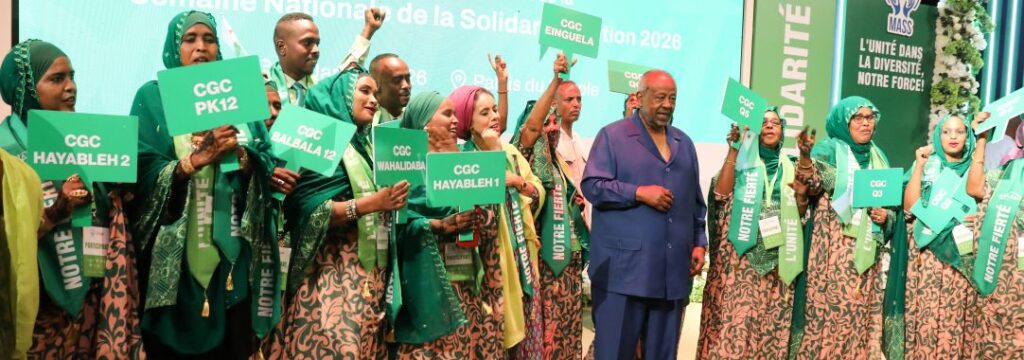
Because the Solidarity we intend to promote is first and foremost a Solidarity of proximity.

A solidarity based on a renewed political perception, rooted in social reality.

A solidarity that allows us to accurately identify the needs and vulnerabilities of our populations, in all their territorial and social diversity.

“This week is therefore an essential moment in the decision-making process where it is necessary to see, listen and understand, before deciding and acting.”

Ladies and Gentlemen,
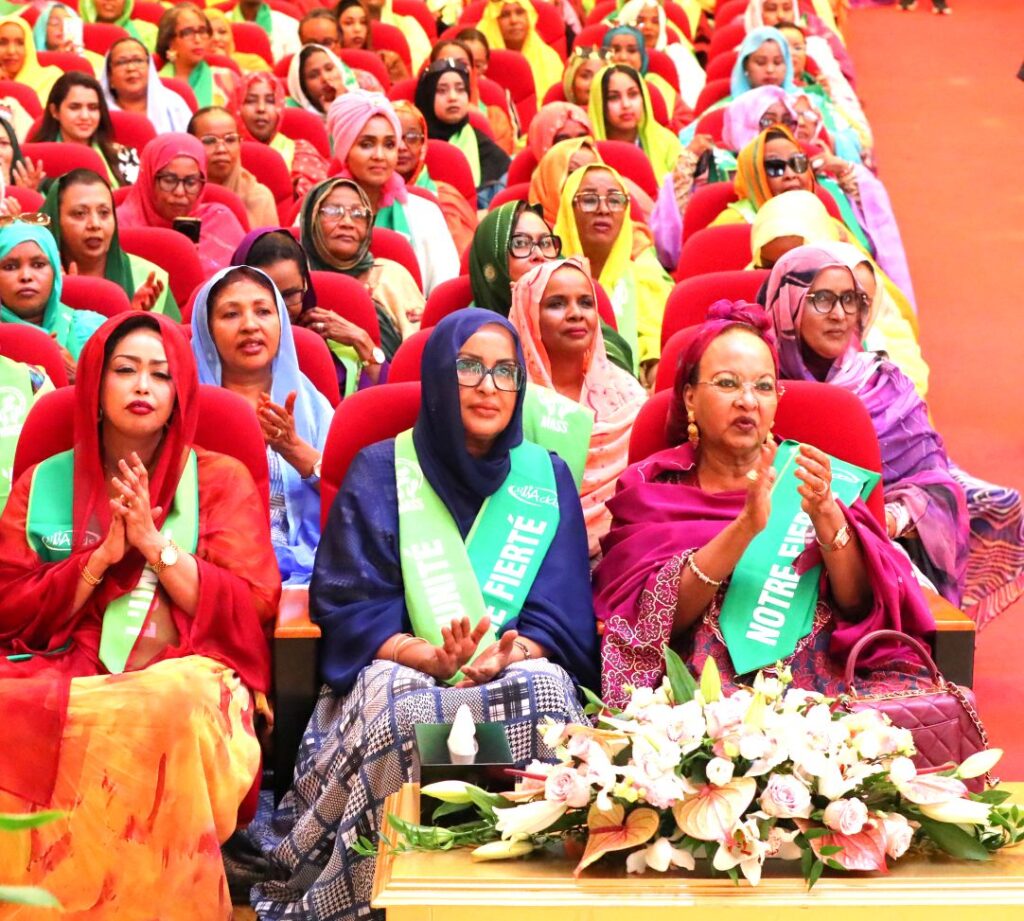

Since the creation of the Ministry of Social Affairs and Solidarity, the notions of poverty, precariousness, or vulnerability are no longer abstract concepts manipulated with statistical scalpels. They now have a face, a geography, a history.

And this is the major merit of this Ministry, which we must commend and appreciate for its true worth. Indeed, for the first time, a comprehensive overview, I would even say a veritable map of poverty and precariousness, has been established, notably thanks to the social register.

This differentiated mapping, taking into account social specificities and territorial distribution, has enabled a decisive break with past practices. It has allowed public action, previously scattered here and there, to be streamlined into targeted, adapted, and effective policies.

Thanks to this new methodology, the State’s responses have been carefully considered and tailored to closely reflect the realities experienced by our citizens. Thus, whether it be social safety nets or social assistance programs in the area of ​​health, the protection mechanisms we have put in place for the most vulnerable have been designed with flexibility to evolve and adapt to changing situations. Among these numerous programs, I want to emphasize the essential role of rural savings and credit unions, which promote the economic inclusion and empowerment of women. For we are convinced that investing in women means investing first and foremost in the individual, then in the family, but also in the community and the future of the nation.

Ladies and Gentlemen

Our national solidarity policy is unambiguous. It clearly distinguishes between assistance and dependency. Assistance is a religious, moral, and republican duty. It is an expression of national fraternity in the face of hardship. But dependency, when it becomes permanent without any prospect of empowerment, becomes a social nuisance. This is why our action is not limited to providing relief; it also aims to transform. Through tailored training, support for entrepreneurial projects, and the acquisition of useful and valuable skills, the Ministry of Social Affairs and Solidarity works to facilitate the shift: the one that leads from dependence to autonomy, from vulnerability to restored dignity.

“Since the creation of the Ministry of Social Affairs and Solidarity, the notions of poverty, precariousness, or vulnerability are no longer abstract concepts manipulated with statistical scalpels.”

Our concept of solidarity, ladies and gentlemen, does not oppose social development to economic development. It makes them complementary. One is a prerequisite for the other. There can be no sustainable growth without social justice. There can be no shared prosperity without inclusion.

Our country does not want growth that does not fuel the fight against insecurity and poverty.

We do not want flattering economic indicators that would leave a portion of our population behind. For the government, the fight against poverty and insecurity is an absolute priority.

Finally, to conclude, I would like to reiterate the central role of the Ministry of Social Affairs and Solidarity in the cohesion of our society.

“There can be no sustainable growth without social justice.”

It is the discreet but essential pillar of our national stability. That is why investing in local social infrastructure means preventing divisions before they deepen.

“There can be no sustainable growth without social justice.”

It’s about reducing inequalities before they become divisive. It’s about strengthening the social contract that unites us.

Thank you for your attention.
Previous Article

President Guelleh reiterates his commitment to dedicating ...

Next Article

Political Horizon: Where solidarity begins, the State ...

0
Shares
  • 0
  • +
  • 0

Related articles More from author

  • News

    Maternal and Child Health: A plan for capacity building

    25 August 2014
    By Connex Design
  • News

    islamic micro Finances: An efficient tool counters precariousness

    25 March 2013
    By ADDS
  • News

    PROPEJA: 31 projects funded in the Ali-Sabieh region

    15 January 2018
    By Connex Design
  • News

    Arhiba: ADDS and Atuyofan set against malnutrition

    16 July 2014
    By Connex Design
  • News

    Dikhil: social projects validation

    1 July 2014
    By Connex Design
  • News

    Holl-Holl: Launch of electrification works

    1 February 2018
    By Connex Design

Leave a reply Cancel reply

0

Les abonnés lisent aussi...

    Follow us

    Retrouvez-nous sur Facebook

    • Recent

    • Popular

    • Comments

    • National Solidarity Week 2026 – Obock city: Strengthening social services and empowering women

      By Connex Design
      3 February 2026
    • National Solidarity Week 2026 – Obock city: Inauguration of several infrastructures

      By Connex Design
      2 February 2026
    • National Solidarity Week 2026: Alaili Dadah locality – community action in support of populations in ...

      By Connex Design
      2 February 2026
    • National Solidarity Week 2026 – Obock Region: the solidarity caravan begins its mission in Alaili ...

      By Connex Design
      2 February 2026
    • Official launch of the 2026 National Solidarity Week Caravan in Alaili Dadah

      By Connex Design
      2 February 2026
    • IGAD Lauds Community Projects Benefiting Refugee Hosts

      By Connex Design
      1 November 2021
    • Recruiting a Senior NGOs

      By Connex Design
      2 November 2013
    • “Social safety nets Project” Ms. Kayad and mothers-lights of Dikhil

      By Connex Design
      24 February 2014
    • MAGAZINE «AGIR» NUMBER 2/ EDITORIAL

      By Connex Design
      25 September 2009
    • International tender: Water supply works

      By Connex Design
      15 May 2014

    RECENT PHOTO GALLERIES

    توقيع اتفاقية تعاون بين Adds و Instad لإجراء دراسة حول التنمية الحضرية

    L’ADDS confie à l’INSTAD une étude d’impact du programme PDUI2-version arabe

    ADDS/INSTAD/PDUI2 Version Arabe

    SoundCloud

    MAGAZINES

    • News

      National Solidarity Week 2026 – Obock city: Strengthening social services and empowering women

      The Solidarity Caravan continues its work in Obock. After its first stop in Alaili Dadah, the Solidarity Caravan continued its journey to Obock, confirming the government’s commitment to local engagement ...
    • News

      National Solidarity Week 2026 – Obock city: Inauguration of several infrastructures

      As is customary, National Solidarity Week is a significant moment for reflection, sharing, and connecting with communities, including those living in the most remote areas. This year, the solidarity caravan ...
    • News

      National Solidarity Week 2026: Alaili Dadah locality – community action in support of populations in ...

      The Solidarity Caravan officially launched this Sunday, February 1, 2026, in the town of Alaili Dadah, in the Obock region, marking a new phase of outreach efforts to support communities ...
    • News

      National Solidarity Week 2026 – Obock Region: the solidarity caravan begins its mission in Alaili ...

      ALAILI DADAH (Obock), February 2, 2026 – The Solidarity Caravan officially began its mission on Sunday in the town of Alaili Dadah. Organized annually by the Ministry of Social Affairs ...

    About

    The Djibouti Social Development Agency, a public administrative establishment, resulting from the merger of the former Djibouti Agency for the Execution of Public Interest Works (ADETIP) and the former Social Development Fund (FSD) project.

    • Agence Djiboutienne de Développement Social
    • Avenue Mohamed DJAMA ELABEH Plateau du serpent
    • BP:4298 Djibouti
    • République de Djibouti
    • Tel: +253 35 86 55/ +253 35 82 82
    • E mail: direction@adds.dj
    • Site Web: www.adds.dj

    Our contact details via Google Map

    RECENT PHOTO GALLERY


    • Home
    • The Agency
    • Photo galleries
    • Videos Gallery
    • Sitemap
    © Agence Djiboutienne de Développement Social - 2026. Tous droits réservés