Djiboutian Agency for Social Development

Top Menu

  • Français
  • English

Main Menu

  • Home
  • The Agency
    • From the General Manager
    • Presentation of the ADDS
    • Agency Organization
    • Institutional structure
    • Funding
    • Area of ​​intervention
    • Texts and laws
    • National partners
    • International partners
  • The Ministry
    • Presentation of the INDS
    • Context
    • Secretariat of state
  • News
  • Publications
    • Magazines @en
  • Contact Us
  • Français
  • English

logo

Djiboutian Agency for Social Development

  • Home
  • The Agency
    • From the General Manager
    • Presentation of the ADDS
    • Agency Organization
    • Institutional structure
    • Funding
    • Area of ​​intervention
    • Texts and laws
    • National partners
    • International partners
  • The Ministry
    • Presentation of the INDS
    • Context
    • Secretariat of state
  • News
  • Publications
    • Magazines @en
  • Contact Us
News
Home›News›Political Horizon: Where solidarity begins, the State begins

Political Horizon: Where solidarity begins, the State begins

By Connex Design
29 January 2026
318
0
Share:

“Solidarity is neither exclusion nor indifference, but a constant presence alongside those facing hardship.” This statement by President Ismaïl Omar Guelleh set the tone for the launch of National Solidarity Week 2026. It embodies not only a political orientation, but also a philosophy deeply rooted in the Djiboutian social fabric, where mutual support and human connection are valued as essential responses to life’s difficulties. It encapsulates the entire spirit of the program. This is not just a matter of rhetoric or awards; it is the fruit of political and social work patiently built over almost twenty years.
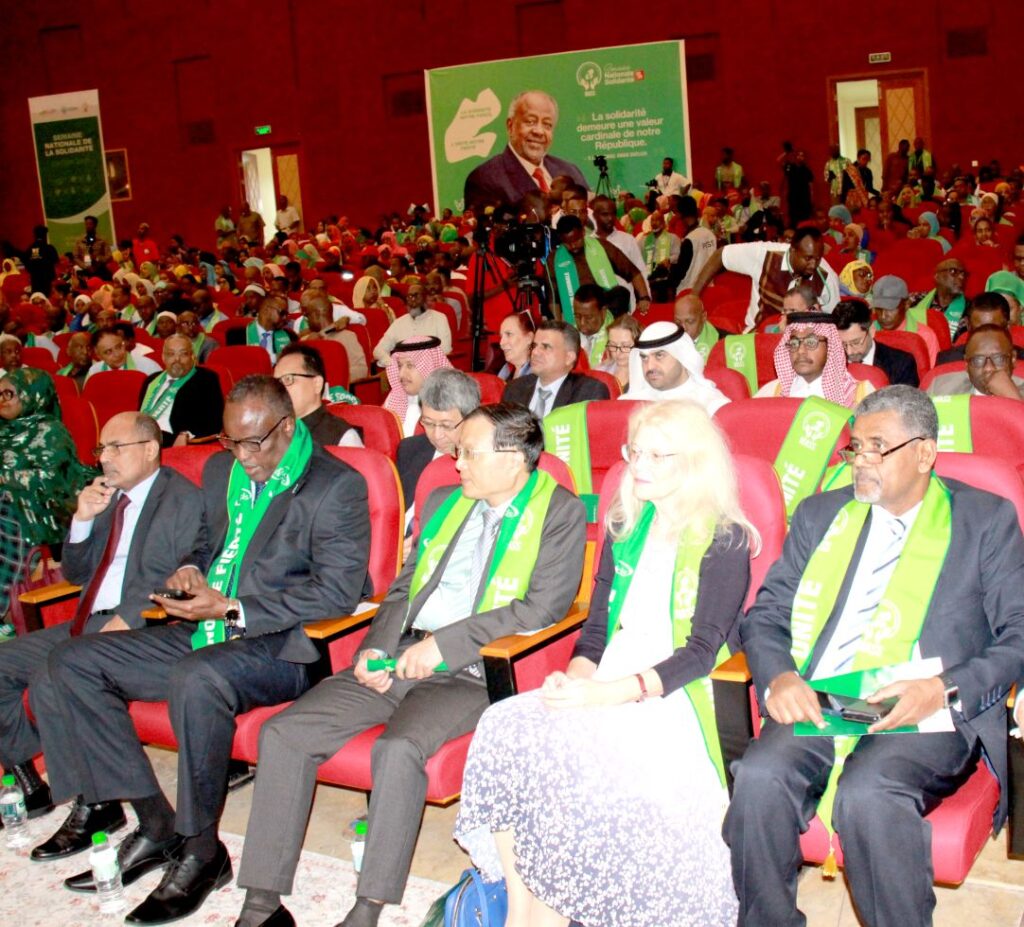
Behind each edition is the desire to create lasting links between citizens, to strengthen trust in institutions and to ensure that every action taken contributes to the concrete improvement of daily life, especially for the most vulnerable.

Last Thursday, under the auspices of the Head of State, the People’s Palace was transformed. Between the music, the stalls, and the people who came from everywhere – women, young people, community leaders – a real energy was palpable.

But behind all the activity, the message was simple: here, solidarity isn’t an option. It’s a pillar of the country. This collective enthusiasm testifies to a shared commitment, a will to stand together in the face of challenges, and an enthusiasm for celebrating not only successes but also the daily efforts of hundreds of citizens. Since 2008, National Solidarity Week has changed its status. It is no longer just a symbol; it has become a real tool for social policy.

The government uses this to remind people that fighting poverty, helping communities take control of their own destiny and facing climate or economic challenges all stem from a deliberate political choice.

This is also at the heart of Djibouti’s Vision 2035, which puts people first. This evolution reflects a desire to move from words to action, to transform collective aspirations into concrete programs, and to ensure that solidarity is integrated into all public policies, from rural development to urban modernization.

This 2026 edition marks a turning point. The president’s speech was neither lyrical nor simplistic. He stated it frankly: “We promise neither mirages nor illusions.” Not a question of promising the moon, but a commitment to leaving no one behind. This honesty lends weight to the program.

It demonstrates political maturity and a keen awareness of the realities of the country, where effectiveness takes precedence over announcements and where it is preferred to patiently build sustainable solutions, rather than giving in to the temptation of empty promises.

Fundamentally, the Week highlights an increasingly structured social approach. This includes strengthening safety nets, targeted cash transfers, support for orphans through the Yatim program, economic empowerment via community savings banks, and reducing territorial inequalities, particularly in regions like Dikhil.

Putting people at the heart of every policy

Social action now seeks resilience, not just assistance. This dynamic relies on modern social management tools, the active involvement of local stakeholders, and the desire to build a society where everyone can overcome difficulties, not alone, but with the support of a supportive and proactive community.

Another key strength is the clear desire to reduce dependence on foreign aid. The message is as much political as economic. Djibouti wants to rely on its own strengths, its institutions, and its communities. National solidarity becomes a lever for sovereignty, a way to strengthen cohesion in an uncertain regional environment. This strategic choice reflects an ambition for emancipation, a will to control its collective destiny, and to offer future generations a development model based on autonomy and shared responsibility.

Health and education are central to this vision. Guaranteeing access to healthcare, ensuring that money does not hinder access to dignity, and opening the doors of education and vocational training to children embody a demanding idea of ​​the welfare state, where compassion goes hand in hand with responsibility. Efforts to improve healthcare infrastructure, train skilled professionals, and innovate in teaching methods illustrate this commitment to placing people at the heart of every policy, offering everyone the opportunity to thrive and contribute to the country’s development.

Ultimately, this National Solidarity Week 2026 feels less like a celebration and more like a moment of truth. We see a country that acknowledges its vulnerabilities but doesn’t abandon its ambitions. A country where cohesion isn’t decreed once and for all: it’s built every day, through collective effort, listening, and commitment.

This collective dynamic, fueled by shared experiences and a desire for inclusion, makes it possible to transform difficulties into levers for progress and to inspire the confidence needed to face the uncertainties of the future.

Many countries talk about solidarity. Djibouti, in its own way, tries to live it. And perhaps that’s the most important thing: making solidarity a method of governance, a promise kept to the most vulnerable.

The strength of this approach lies in its ability to unite society around common values, to promote social justice and to permanently place solidarity at the heart of the national project.
Previous Article

“The solidarity we intend to promote is ...

Next Article

National Solidarity Week 2026 – Obock city: ...

0
Shares
  • 0
  • +
  • 0

Related articles More from author

  • News

    Kalaf: A more targeted solidarity

    19 October 2015
    By Connex Design
  • News

    Ali-Sabieh region: Official launch of the youth entrepreneurship project

    13 July 2020
    By Connex Design
  • News

    Microfinance Commission: Establishment of a permanent technical secretariat

    23 July 2017
    By Connex Design
  • News

    The leader of the State inaugurates a solar power station

    25 March 2013
    By ADDS
  • News

    Prevention of child and maternal malnutrition: The facilitators trained Balbala

    16 November 2014
    By Connex Design
  • News

    2nd phase of the Youth Employment and Handicrafts Project: Convincing Business Plans

    10 September 2017
    By Connex Design
0

Les abonnés lisent aussi...

    Follow us

    Retrouvez-nous sur Facebook

    • Recent

    • Popular

    • Comments

    • Special edition on the ADDS PDUI2 project: A sustainable investment for the population

      By Connex Design
      12 March 2026
    • Grand opening of the PDUI2 social infrastructure

      By Connex Design
      12 March 2026
    • The Djiboutian Agency for Social Development (ADDS): A central player in the dynamics of social ...

      By Connex Design
      12 March 2026
    • Djibouti: 50 years of sustainable partnership with the French Development Agency

      By Connex Design
      12 March 2026
    • Exclusive interview: “DSDA executes on behalf of the State and decentralized authorities; it will never ...

      By Connex Design
      12 March 2026
    • IGAD Lauds Community Projects Benefiting Refugee Hosts

      By Connex Design
      1 November 2021
    • Recruiting a Senior NGOs

      By Connex Design
      2 November 2013
    • “Social safety nets Project” Ms. Kayad and mothers-lights of Dikhil

      By Connex Design
      24 February 2014
    • MAGAZINE «AGIR» NUMBER 2/ EDITORIAL

      By Connex Design
      25 September 2009
    • International tender: Water supply works

      By Connex Design
      15 May 2014

    RECENT PHOTO GALLERIES

    توقيع اتفاقية تعاون بين Adds و Instad لإجراء دراسة حول التنمية الحضرية

    L’ADDS confie à l’INSTAD une étude d’impact du programme PDUI2-version arabe

    ADDS/INSTAD/PDUI2 Version Arabe

    SoundCloud

    MAGAZINES

    • News

      Special edition on the ADDS PDUI2 project: A sustainable investment for the population

      A city is not defined solely by its buildings, roads, or amenities. A city is measured first and foremost by the quality of life it offers its inhabitants. Behind every ...
    • News

      Grand opening of the PDUI2 social infrastructure

      On Thursday, January 22, 2026, His Excellency Mr. Ismaïl Omar Guelleh, President of the Republic, inaugurated the new social infrastructure built in Balbala as part of the Integrated Urban Development ...
    • News

      The Djiboutian Agency for Social Development (ADDS): A central player in the dynamics of social ...

      Born from the merger of ADETIP (Djiboutian Agency for the Execution of Public Works) and the Social Development Fund (FSD) at the end of 2007, the Djiboutian Agency for Social ...
    • News

      Djibouti: 50 years of sustainable partnership with the French Development Agency

      Present in Djibouti since 1974, the French Development Agency (AFD) is one of the country’s long-standing partners. For over fifty years, it has supported the Djiboutian authorities and local stakeholders ...

    About

    The Djibouti Social Development Agency, a public administrative establishment, resulting from the merger of the former Djibouti Agency for the Execution of Public Interest Works (ADETIP) and the former Social Development Fund (FSD) project.

    • Agence Djiboutienne de Développement Social
    • Avenue Mohamed DJAMA ELABEH Plateau du serpent
    • BP:4298 Djibouti
    • République de Djibouti
    • Tel: +253 35 86 55/ +253 35 82 82
    • E mail: direction@adds.dj
    • Site Web: www.adds.dj

    Our contact details via Google Map

    RECENT PHOTO GALLERY


    • Home
    • The Agency
    • Photo galleries
    • Videos Gallery
    • Sitemap
    © Agence Djiboutienne de Développement Social - 2026. Tous droits réservés